🦷 General Care
✨ Treatments
👶 Family Care
💚 Wellness
💡 Resources

🦷 General Care
✨ Treatments
👶 Family Care
💚 Wellness
💡 Resources

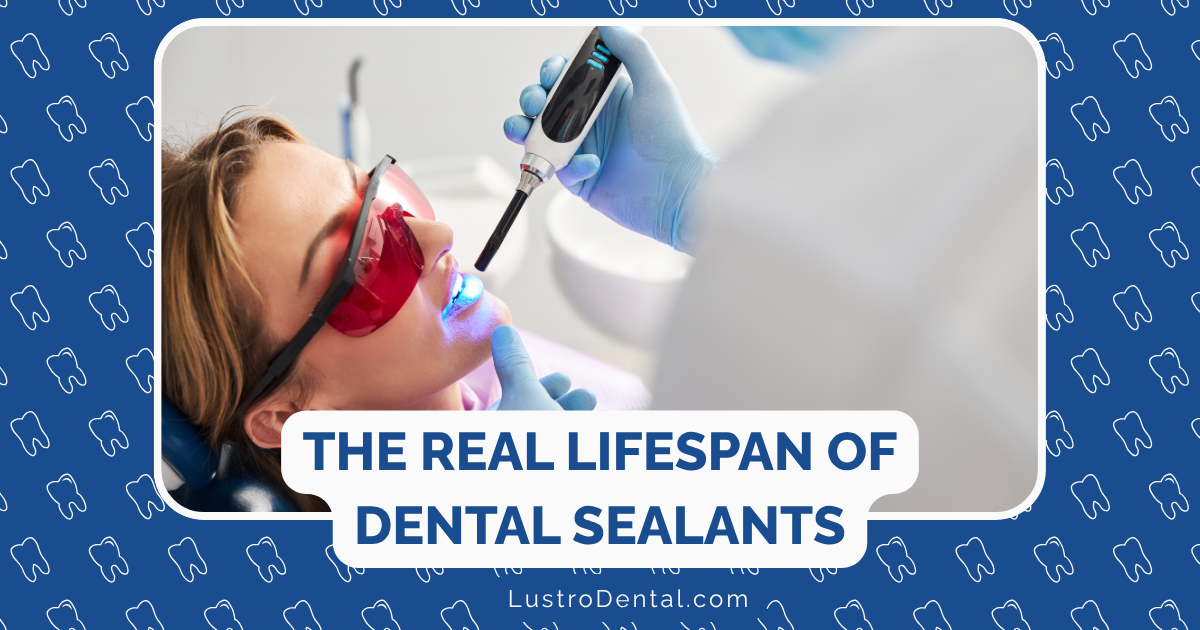
When patients ask me about dental sealants, their first question is almost always about longevity. “If I’m going to invest in this preventive treatment,” they reason, “I want to know how long it’s going to last.”
It’s a fair question—and one that doesn’t have a simple, one-size-fits-all answer.
The truth is, dental sealants can last anywhere from 2 to 10 years, depending on a variety of factors. According to the American Dental Association, properly applied sealants can protect teeth for several years before needing replacement. But what determines whether your sealants will be short-lived or provide a decade of protection?
Let’s dive into the factors that influence dental sealant longevity and what you can do to help them last as long as possible.
Before we explore longevity, let’s quickly review what dental sealants actually are.
Dental sealants are thin, protective coatings applied to the chewing surfaces of back teeth (molars and premolars). These surfaces contain deep grooves and pits where food particles and bacteria can hide—areas that are difficult to clean even with diligent brushing. Sealants fill in these grooves, creating a smooth surface that’s easier to clean and protected from decay-causing bacteria.
The Centers for Disease Control and Prevention (CDC) reports that sealants can prevent 80% of cavities for the first two years after application and continue to protect against 50% of cavities for up to four years. That’s significant protection, especially for children and teenagers who are at higher risk for cavities.
One of the most significant factors affecting sealant longevity is the material used. There are two primary types of dental sealants:
Resin sealants are made from plastic materials similar to those used in composite fillings. According to a comprehensive study published in PMC, resin-based sealants show retention rates of up to 80% after two years.
Pros of resin sealants:
Cons of resin sealants:
Glass ionomer cement (GIC) sealants are made from a mixture of glass and organic acid. The same PMC study found that glass ionomer sealants have retention rates of about 44% after two years.
Pros of glass ionomer sealants:
Cons of glass ionomer sealants:
The choice of material often depends on the specific clinical situation. For example, glass ionomer sealants might be preferred for partially erupted molars where moisture control is challenging, while resin sealants might be chosen for fully erupted teeth where a dry field can be maintained.
The way sealants are applied significantly impacts how long they’ll last. According to research from McDougal DDS, proper application technique is one of the most critical factors in sealant longevity.
Key elements of proper application include:
Before sealant application, the tooth surface must be thoroughly cleaned to remove plaque, debris, and the outer layer of enamel. This is typically done using a special brush or air abrasion.
For resin sealants, the tooth surface is etched with an acid (typically 37% phosphoric acid) for 15-20 seconds. This creates microscopic pores in the enamel that allow the sealant to bond mechanically to the tooth. Inadequate etching or rinsing can compromise this bond.
This is perhaps the most critical factor. For resin sealants, even tiny amounts of saliva contamination can significantly reduce bond strength. Dentists use various isolation techniques, such as cotton rolls, dry angles, and sometimes rubber dams to keep the area dry.
A clinical study found that saliva contamination during sealant placement can increase microleakage and reduce bond strength by up to 50%.
The sealant must flow into all pits and fissures without air bubbles or voids. Incomplete coverage leaves vulnerable areas where decay can start.
For light-cured sealants, the curing light must be held at the correct distance and for the appropriate time to ensure complete polymerization. Inadequate curing leads to a weaker sealant that wears away faster.
Even perfectly applied sealants won’t last forever, and several patient-related factors can significantly impact their longevity:
While sealants provide protection, they don’t replace good oral hygiene. Regular brushing and flossing help prevent decay around the edges of sealants and reduce overall bacterial load in the mouth.
According to Modern Dental Smiles, consistent oral hygiene is one of the most important factors in extending sealant life.
What you eat and how you eat it matters:
Grinding or clenching your teeth puts enormous pressure on sealants, causing them to wear down faster. A study from Arboretum Dentist found that bruxism is a significant factor in premature sealant failure.
If you grind your teeth, wearing a nightguard can help protect both your teeth and your sealants.
Some teeth naturally receive more pressure during chewing than others. Sealants on these high-pressure areas tend to wear away faster. Similarly, if your bite is uneven, certain teeth may bear more force, affecting sealant durability.
While some factors affecting sealant longevity are out of your control, there’s plenty you can do to help your sealants last as long as possible:
Brush twice daily with fluoride toothpaste and floss daily. Consider using a soft-bristled toothbrush to avoid unnecessary abrasion on your sealants. According to Keep28, gentle but thorough brushing is key to maintaining sealant integrity.
Limit sugary and acidic foods and beverages. When you do consume them, rinse your mouth with water afterward. Avoid using your teeth as tools (opening packages, cracking nuts) and be cautious with very hard or sticky foods.
If you grind or clench your teeth, talk to your dentist about a custom nightguard. This simple appliance can significantly extend the life of your sealants by reducing pressure and wear.
Perhaps the most important maintenance step is regular dental check-ups. Your dentist can:
Premier Cosmetic Dental recommends having sealants checked every six months during regular dental visits.
Even with excellent care, sealants don’t last forever. Here are signs that your sealants might need attention:
If you notice any of these signs, it’s time to see your dentist. Early intervention can often mean a simple repair rather than complete replacement.
Let’s look at what the research tells us about how long different types of sealants actually last:
A long-term study published in MDPI tracked sealants over a 10-year period and found:
However—and this is important—the study found that despite the difference in retention rates, both types of sealants were similarly effective at preventing cavities over the 10-year period. This suggests that even partially retained sealants, or the residual effect of fluoride release from glass ionomers, continue to provide protection.
According to Dimensions of Dental Hygiene, resin-based sealants can reduce caries by approximately 80% in the first two years and remain effective for nearly five years.
Even more encouraging, the American Dental Association reports that sealants can reduce the risk of decay in molars by nearly 80% for 2-3 years and continue to be effective for up to 9 years.
Given that sealants need periodic replacement, you might wonder if they’re worth the investment. Consider this:
Even if sealants need replacement every 5 years, they’re still considerably more cost-effective than treating cavities. Plus, they help you avoid the discomfort and time associated with restorative procedures.
Children are the primary recipients of sealants, typically applied soon after permanent molars erupt (around ages 6 and 12). The CDC notes that school-aged children without sealants are three times more likely to develop cavities than those with sealants.
For children, factors affecting sealant longevity include:
Adults can benefit from sealants too, especially those with deep grooves in their teeth or a history of decay. For adults, additional factors affecting longevity include:
Exciting developments in dental materials science promise to improve sealant longevity:
Newer sealant materials contain bioactive components that release calcium, phosphate, and fluoride ions. These materials not only create a physical barrier but actively strengthen the surrounding tooth structure.
Research is underway on “smart” materials that can repair minor damage themselves, potentially extending sealant life significantly.
Digital scanning and precision application tools are making sealant placement more accurate and effective.
Dental sealants are one of dentistry’s most effective preventive tools, but their longevity depends on multiple factors—some within your control, others not.
The material used, application technique, your oral habits, and regular maintenance all play crucial roles in determining how long your sealants will last. While no sealant lasts forever, most provide years of valuable protection against tooth decay.
Remember that even if a sealant doesn’t last the full potential 10 years, every year it remains intact is a year of protection against cavities. And with proper care and regular dental check-ups, you can maximize that protection.
Have you had dental sealants? How long have they lasted for you? Share your experience in the comments below!