🦷 General Care
✨ Treatments
👶 Family Care
💚 Wellness
💡 Resources

🦷 General Care
✨ Treatments
👶 Family Care
💚 Wellness
💡 Resources

When Michael woke up with a throbbing toothache, he initially dismissed it as a minor issue that could wait until his next dental appointment. Three days later, he was in the emergency room with a severely swollen face, difficulty swallowing, and a dangerously high fever. What began as a simple toothache had progressed to a serious dental abscess that required immediate medical intervention.
“I had no idea a toothache could become so dangerous so quickly,” Michael recalled. “If I had recognized the warning signs earlier, I could have avoided a frightening emergency situation.”
Dental abscesses are more than just painful inconveniences—they’re serious infections that can become life-threatening if left untreated. Understanding the symptoms that require immediate attention could save not just your tooth, but potentially your life.
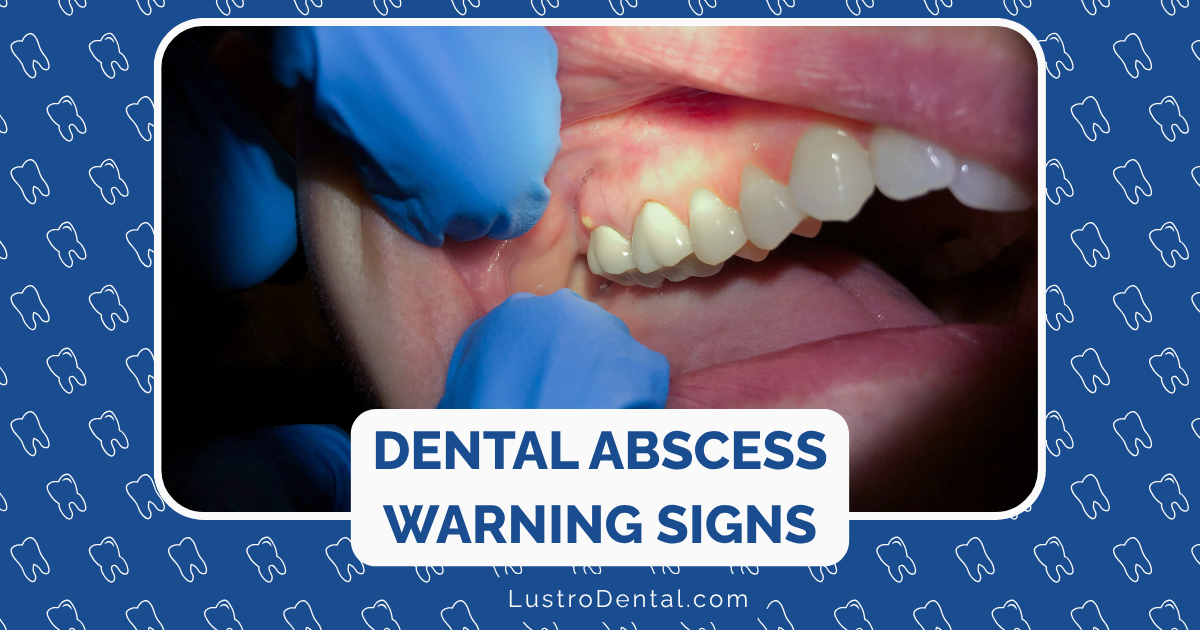
A dental abscess is a pocket of pus caused by a bacterial infection. The infection begins in or around a tooth and, if left untreated, can spread to surrounding tissues and beyond.
There are two main types of dental abscesses:
This type forms at the tip of a tooth’s root and is typically caused by an untreated cavity, a cracked tooth, or failed dental work that allows bacteria to enter the tooth’s pulp chamber and infect the root tip.
This type develops in the gum tissue alongside a tooth, often as a result of advanced gum disease (periodontitis) or a foreign object becoming trapped in the gum.
Dr. Sarah Chen, a board-certified endodontist with the American Association of Endodontists, explains: “Dental abscesses are the body’s way of trying to contain an infection. The immune system creates this pocket of pus to prevent bacteria from spreading further. However, without proper treatment, the abscess can rupture or the infection can spread beyond this containment.”
While any dental abscess requires professional treatment, certain symptoms indicate a medical emergency that shouldn’t wait for a regular dental appointment. Here are the key warning signs that demand immediate attention:
Emergency indicator: Pain that is severe, throbbing, radiating, and not relieved by over-the-counter pain medications.
Why it’s serious: Intense pain that doesn’t respond to pain relievers often indicates that the infection is significant and potentially spreading.
Dr. Robert Wilson of Mayo Clinic notes: “Pain is your body’s alarm system. When that alarm can’t be silenced with normal pain management approaches, it’s telling you something requires urgent attention.”
Emergency indicator: Noticeable swelling of the face, jaw, or neck, especially if it’s spreading or increasing rapidly.
Why it’s serious: Swelling indicates that the infection is spreading into the surrounding tissues. Rapidly increasing swelling can be a sign of cellulitis or Ludwig’s angina, serious conditions that can compromise breathing.
“Facial swelling that progresses quickly, especially if it crosses the midline of the face or extends down the neck, requires immediate medical attention,” warns Dr. Lisa Rodriguez, an emergency dental specialist.
Emergency indicator: Temperature of 101°F (38.3°C) or higher, especially when accompanied by dental pain or swelling.
Why it’s serious: Fever is a sign that your body is fighting a significant infection that may have spread beyond the local area of the tooth.
Emergency indicator: Any sensation of throat tightening, difficulty breathing, trouble swallowing, or altered voice.
Why it’s serious: These symptoms may indicate that the infection has spread to areas that could compromise your airway—a life-threatening emergency.
“If you’re experiencing any difficulty breathing or swallowing along with dental pain or swelling, call 911 or go to the emergency room immediately,” advises Dr. Wilson. “This is one of the most serious complications of dental infections.”
Emergency indicator: A visible pimple-like bump on the gum (especially if painful or draining pus), accompanied by significant pain or swelling.
Why it’s serious: While a small “gum boil” alone might not be an emergency, when accompanied by severe symptoms, it confirms the presence of an abscess that requires prompt treatment.
Emergency indicator: Inability or severe difficulty opening your mouth (trismus).
Why it’s serious: This can indicate that the infection has spread to the muscles controlling jaw movement or that significant swelling is affecting these structures.
Emergency indicator: General illness symptoms like nausea, vomiting, diarrhea, confusion, or extreme fatigue alongside dental pain.
Why it’s serious: These symptoms suggest the infection may be affecting your entire system, potentially leading to sepsis—a life-threatening condition.
Understanding where to seek care can be crucial in a dental emergency:
Dr. Michael Johnson, an emergency medicine physician, explains: “Emergency rooms can manage pain, control infection with antibiotics, and address life-threatening complications. However, they typically cannot provide definitive dental treatment like root canals or extractions. You’ll still need follow-up with a dentist.”
Dental abscesses don’t resolve on their own and can lead to serious—sometimes life-threatening—complications if left untreated:
Bacteria from a dental abscess can spread to:
According to research published in the Journal of the American Dental Association, untreated dental abscesses can lead to:
Dr. Rodriguez emphasizes: “What makes dental abscesses particularly dangerous is how quickly they can progress from a localized problem to a systemic emergency. The anatomy of the head and neck creates pathways for infection to spread to critical areas.”
Returning to Michael’s experience, his initial toothache progressed to a serious infection within just three days.
“By the time I got to the emergency room, the infection had spread into the tissues of my neck, making it difficult to swallow,” Michael explained. “The doctors told me I was lucky I didn’t wait any longer, as the infection was approaching my airway.”
Michael required IV antibiotics, surgical drainage of the abscess, and eventually a root canal once the infection was controlled. His recovery took weeks, and the experience left him with a new appreciation for dental health.
“I wish I had known that increasing pain, swelling, and fever were serious warning signs,” he reflected. “I would have sought help immediately instead of trying to tough it out.”
If you seek emergency care for a dental abscess, treatment typically involves:
If you’re experiencing symptoms of a dental abscess and are waiting to see a healthcare provider, these measures may provide temporary relief:
Dr. Chen cautions: “These measures are only for temporary relief while arranging emergency care. They will not cure the infection, and delaying proper treatment can lead to serious complications.”
The best way to handle dental abscesses is to prevent them from developing:
Understanding the warning signs of a dental abscess can make the difference between a routine dental procedure and a medical emergency. While any abscess requires professional treatment, recognizing the symptoms that demand immediate attention can prevent dangerous complications.
As Michael’s experience demonstrates, dental infections can progress rapidly from annoying to life-threatening. By knowing the warning signs and seeking appropriate care promptly, you can protect not just your oral health, but your overall wellbeing.
Remember: Severe pain, facial swelling, fever, and difficulty breathing or swallowing are never normal and require immediate medical attention. When in doubt, err on the side of caution—it could save your life.
Have you experienced a dental abscess? We’d love to hear about your experience in the comments below.