🦷 General Care
✨ Treatments
👶 Family Care
💚 Wellness
💡 Resources

🦷 General Care
✨ Treatments
👶 Family Care
💚 Wellness
💡 Resources

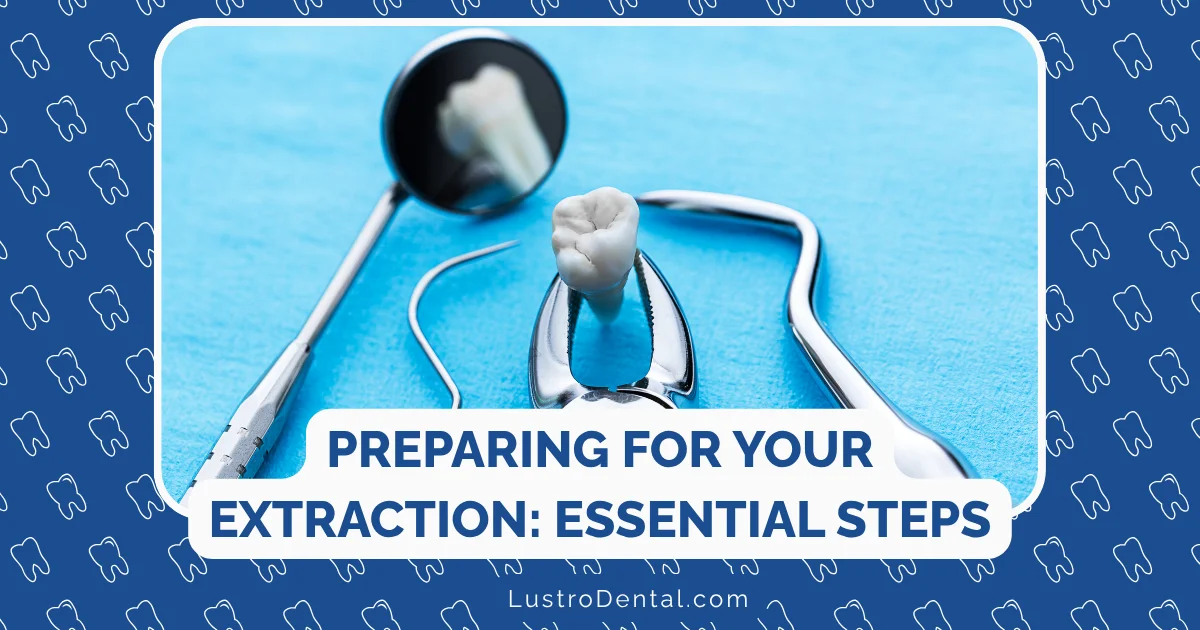
Learning that you need a tooth extraction can trigger a wave of anxiety. I’ve seen it countless times—that moment when a patient’s eyes widen at the news. But here’s what I always tell them: being prepared makes all the difference between a stressful experience and a manageable one.
As someone who’s guided many people through dental procedures, I’ve found that the preparation phase is where you can gain control over your experience. This comprehensive guide will walk you through everything you need to do before your extraction appointment, helping you feel confident and ready.
The foundation of a smooth extraction experience starts with clear communication. At your consultation appointment:
Dr. Sarah Johnson of the American Dental Association emphasizes, “Patients who ask questions and understand their procedure report significantly less anxiety and better overall experiences.”
This isn’t the time to leave out details. According to the Cleveland Clinic, your dentist needs to know about:
Even conditions that seem unrelated to your mouth can impact your extraction plan and recovery.
Create a comprehensive list of all medications you’re taking, including:
Some medications, particularly blood thinners like aspirin, warfarin, or even certain supplements like fish oil, may need to be temporarily adjusted before your procedure. Never stop any prescribed medication without consulting both your dentist and the doctor who prescribed it.
If you’ll be receiving any form of sedation beyond local anesthesia, you’ll need someone to drive you home afterward. According to the Oral Surgery Group, this person should:
This isn’t just a recommendation—it’s typically a requirement, as practices won’t perform sedation procedures without confirmed transportation arrangements.
Dental procedures can be costly, and surprise bills only add to your stress. Take time to:
Many practices, like Perfect Smiles Dental, recommend reviewing your insurance policy to understand coverage limitations before your procedure.
Prepare your home for a comfortable recovery by purchasing:
Having these items ready means you won’t need to make a last-minute shopping trip while dealing with post-extraction discomfort.
Both smoking and alcohol can significantly impact your healing process:
According to a study published in the Journal of the American Dental Association, patients who smoke have a 29% higher risk of complications following extractions.
While there’s no need for major dietary changes days before your procedure, consider:
If you’ll be receiving sedation, you’ll likely need to fast before your procedure:
Always follow the specific instructions provided by your dental office, as requirements vary based on the type of sedation and the time of your appointment.
Set up a recovery area with:
Adequate rest before your procedure helps:
Try to get to bed early and practice relaxation techniques if you’re feeling nervous.
According to Texas Oral Surgery Group, comfort should be your priority:
Plan to arrive 15 minutes before your scheduled appointment to:
If you experience dental anxiety, consider these additional preparation steps:
Those with certain medical conditions may need additional preparation:
Always consult with both your medical doctor and dentist about specific preparations related to your condition.
Remember that tooth extraction is one of the most common dental procedures performed. Your dental team has likely guided hundreds, if not thousands, of patients through this exact process.
By taking these preparation steps, you’re not just making the procedure easier for your dental team—you’re creating the conditions for your own comfort and swift recovery.
Have you had a tooth extraction before? What preparation steps helped you the most? Share your experiences in the comments below to help others in our community prepare for their upcoming procedures.