🦷 General Care
✨ Treatments
👶 Family Care
💚 Wellness
💡 Resources

🦷 General Care
✨ Treatments
👶 Family Care
💚 Wellness
💡 Resources

When your endodontist mentions the word “apicoectomy,” it might sound intimidating. Trust me, I’ve seen that look of anxiety on countless patients’ faces. But knowledge is power, and understanding exactly what happens during this procedure can transform fear into confidence.
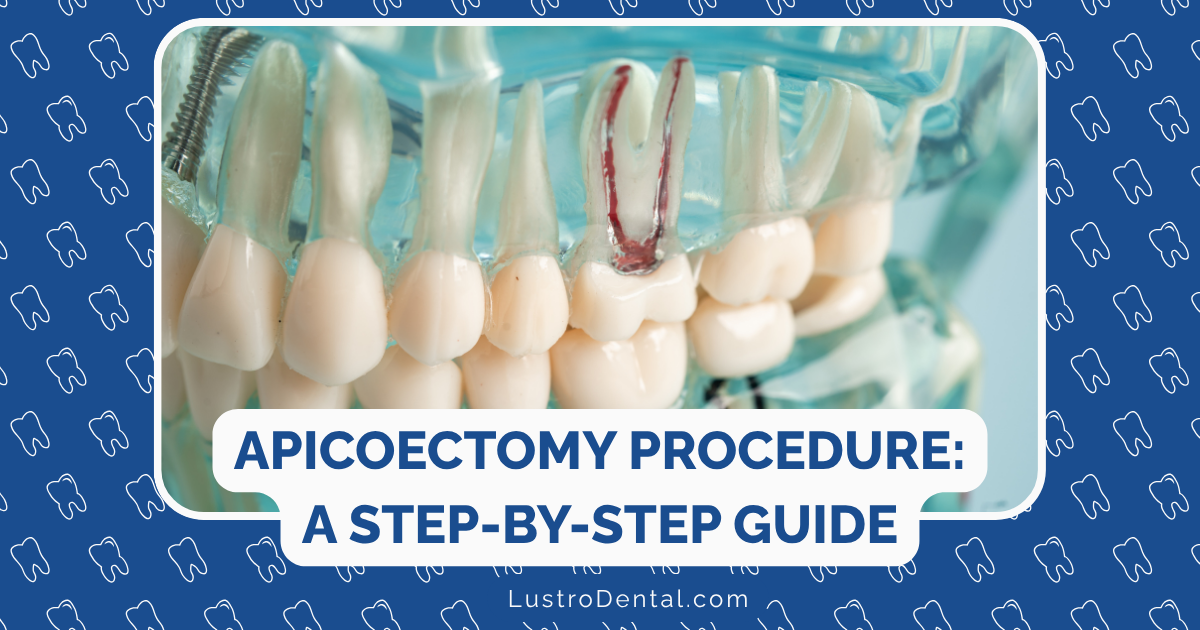
As someone who’s guided many patients through this journey, I’ve created this comprehensive visual guide to demystify the apicoectomy procedure—a specialized form of endodontic surgery that can save your natural tooth when conventional root canal treatment isn’t enough.
An apicoectomy (also called root-end surgery) is a microsurgical procedure that removes the very tip of a tooth’s root along with any surrounding infected tissue. Think of it as a targeted approach that addresses infection at its source when a traditional root canal treatment has failed or isn’t possible.
According to the American Association of Endodontists, apicoectomies have a success rate of approximately 97%, making them one of the most reliable procedures for saving teeth that might otherwise require extraction.
Before diving into the procedure itself, let’s understand when you might need one:
Dr. Sarah Johnson, endodontist at University Dental Research Center, notes that “approximately 15% of teeth that have had root canal therapy may eventually require an apicoectomy to address persistent infection that couldn’t be resolved through conventional methods.”
Now, let’s walk through exactly what happens during this endodontic surgery:
Pro tip: Communicate any anxiety with your endodontist beforehand. Many offices offer various comfort measures like noise-canceling headphones or weighted blankets to help you relax.
This part of the procedure typically takes 10-15 minutes. The precision of this step is crucial, which is why endodontists use specialized magnification tools.
According to a 2023 study in the Journal of Endodontics, using ultrasonic instruments for this step has increased success rates by nearly 10% compared to traditional surgical methods.
This filling is typically 3mm deep and serves as a barrier against bacteria. Modern filling materials like MTA have revolutionized this procedure, as they’re specifically designed to promote healing and prevent reinfection.
Most endodontists use dissolvable sutures that will disappear on their own within 7-10 days, though some may use sutures that need removal at a follow-up appointment.
Recovery from an apicoectomy is generally straightforward, but knowing what to expect helps ensure optimal healing:
Dr. Michael Chen of Advanced Endodontic Care recommends, “Using a saltwater rinse (1/2 teaspoon salt in 8 oz warm water) starting 24 hours after surgery can promote healing and keep the area clean.”
While you’ll likely feel back to normal within 7-14 days, complete healing of the bone around the root tip takes longer:
A study published in the International Endodontic Journal found that 85% of patients report minimal disruption to their daily activities following an apicoectomy.
While apicoectomies are highly successful, it’s important to understand potential complications:
The good news? According to research from the Journal of Endodontics, modern apicoectomy techniques have success rates between 94-97% when performed by a specialist.
The cost of an apicoectomy typically ranges from $900-$1,300 without insurance. Most dental insurance plans provide some coverage for this procedure, as it’s considered a medically necessary treatment rather than cosmetic.
Always check with your insurance provider beforehand and ask your endodontist’s office about payment plans or options if cost is a concern.
If you’re facing persistent tooth pain despite having had a root canal, an apicoectomy might be your path to relief while saving your natural tooth. The alternative is typically extraction followed by an implant or bridge, which is generally more costly and invasive.
Dr. Lisa Wong, Director of Endodontic Research Institute, emphasizes, “Preserving your natural tooth whenever possible offers significant advantages for long-term oral health and function.”
An apicoectomy is a precise, effective procedure that has saved countless teeth that would otherwise be lost. By understanding each step of the process, you can approach this treatment with confidence rather than anxiety.
Remember, the temporary discomfort of the procedure is far outweighed by the long-term benefit of keeping your natural tooth. And with today’s advanced techniques and materials, the process is more comfortable and successful than ever before.
Have you had an apicoectomy or are you considering one? Share your experience or questions in the comments below.