🦷 General Care
✨ Treatments
👶 Family Care
💚 Wellness
💡 Resources

🦷 General Care
✨ Treatments
👶 Family Care
💚 Wellness
💡 Resources

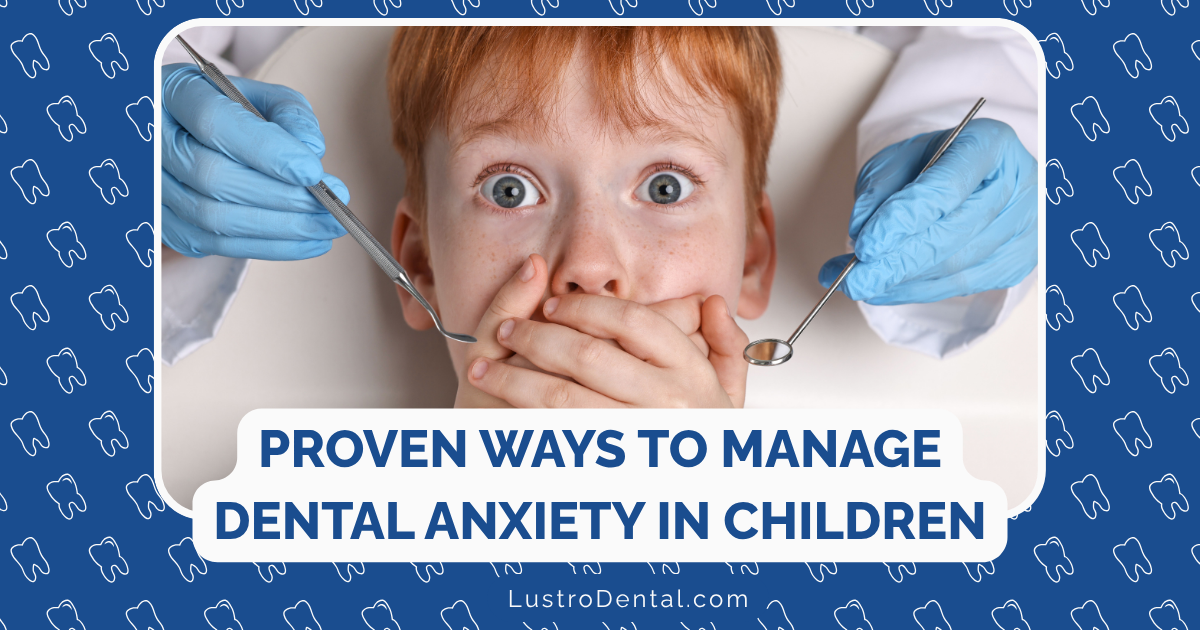
That wide-eyed look of terror. The tears. The pleading to go home. If you’ve experienced your child’s dental anxiety firsthand, you know it can be heartbreaking—and incredibly frustrating. You’re not alone: studies show that between 50-80% of children experience some form of dental anxiety, with 10-20% suffering from severe dental fear that can impact their oral health for years to come.
As a parent, you want to help—but how? This comprehensive guide explores evidence-based techniques that actually work to manage your child’s dental anxiety, turning those dreaded appointments into positive experiences that set the foundation for lifelong oral health.
Before we dive into solutions, it’s important to understand what’s really happening when your child resists dental visits.
Dental anxiety in children typically stems from several sources:
Dr. Sarah Johnson, pediatric dentist at Children’s Dental Health, explains: “Children’s dental anxiety isn’t just about being ‘difficult.’ Their fears are real and valid. Understanding this is the first step in helping them overcome these challenges.”
Managing dental anxiety begins long before you arrive at the dental office. These preparation techniques can dramatically reduce fear:
Research published by the American Academy of Pediatric Dentistry confirms that children who visit the dentist by age one have significantly lower rates of dental anxiety later in childhood. These early, non-invasive visits help children become familiar with the dental environment without the association of pain or discomfort.
A recent study in the International Journal of Pediatric Dentistry found that the frequency of dental experiences positively affects children’s anxiety levels, with significant differences between check-ups every six months versus annually. Regular exposure helps normalize the experience.
Not all dental practices are created equal when it comes to treating anxious children. Pediatric dentists receive additional training specifically focused on child psychology and behavior management.
Look for practices that:
Practice makes perfect—and less scary! Set up a pretend dental office at home where your child can:
Dr. Michael Chen of Bright Smiles Pediatric Dentistry suggests: “Use stuffed animals or dolls to demonstrate what happens during a dental check-up. This gives children a sense of control and understanding about the process.”
Stories are powerful tools for helping children process new experiences. Some excellent options include:
The American Dental Association’s MouthHealthy Kids site offers free downloadable coloring sheets and activities about dental visits.
Even with thorough preparation, many children still experience anxiety during the actual appointment. These evidence-based techniques can help in the moment:
The way dental professionals communicate with children can significantly impact anxiety levels. A 2025 study published in the International Journal of Clinical Pediatric Dentistry compared two communication techniques:
The study found both methods equally effective at reducing anxiety during dental procedures. Parents can request these approaches when scheduling appointments.
Distraction is one of the most powerful tools for managing in-the-moment anxiety. Effective options include:
Research from Delta Dental shows that children who are actively engaged in distraction activities report up to 60% less anxiety during dental procedures.
Teaching your child simple relaxation techniques can provide them with lifelong coping skills:
For preschoolers (3-5 years):
For school-age children (6-12 years):
For teenagers:
Positive reinforcement—rewarding desired behaviors—is remarkably effective for managing dental anxiety. According to a study from Lewisville Kids Dentistry, children who receive consistent positive reinforcement show significant improvements in dental behavior over time.
Effective reinforcement strategies include:
Some children require additional support beyond these standard techniques:
Children with sensory processing differences may find the dental environment particularly challenging. Accommodations might include:
Many pediatric dental offices now offer “sensory-friendly” appointment options. The Autism Speaks Dental Guide provides excellent resources for children with sensory sensitivities.
For some children with extreme anxiety or special healthcare needs, sedation dentistry may be appropriate. Options typically include:
A fascinating 2025 study published in Nature found that children who received comprehensive dental treatment under general anesthesia actually showed decreased dental anxiety 14 days after treatment compared to their pre-treatment levels. This suggests that for some children, completing necessary treatment under general anesthesia might actually improve their long-term relationship with dental care.
Managing dental anxiety isn’t just about getting through the next appointment—it’s about fostering a positive relationship with dental care that lasts a lifetime:
Children who have positive associations with daily oral hygiene tend to have less dental anxiety. Make brushing and flossing fun by:
The American Dental Association recommends two minutes of brushing twice daily and daily flossing for optimal oral health.
Children are remarkably perceptive. If you show anxiety about your own dental visits or make negative comments about dentistry, your child will likely adopt similar attitudes.
Dr. Emily Rodriguez, child psychologist specializing in anxiety disorders, notes: “Parents should be careful about sharing their own dental fears or negative experiences. Instead, model calm behavior and positive language around dental visits.”
Overcoming dental anxiety is a journey, not a destination. Acknowledge and celebrate small victories:
Managing your child’s dental anxiety requires collaboration between parents, dental professionals, and the child themselves. By understanding the sources of dental fear, preparing appropriately, using effective in-the-moment techniques, and building positive associations over time, you can help your child develop a healthy relationship with dental care.
Remember that setbacks are normal, and progress may not be linear. With patience, consistency, and the right techniques, most children can overcome dental anxiety and maintain good oral health throughout their lives.
Has your child struggled with dental anxiety? What techniques have you found most helpful? Share your experiences in the comments below!
The American Academy of Pediatric Dentistry recommends the first dental visit by age 1 or within 6 months after the first tooth erupts.
Consider finding a new dentist who specializes in anxious patients. Be honest about the previous experience, start with very brief, positive visits, and gradually build up to more involved appointments.
For severe anxiety, dentists may recommend anti-anxiety medications to be taken before appointments. These should be discussed with both your child’s dentist and pediatrician.
Ask for recommendations from other parents, read online reviews specifically mentioning anxious children, and schedule consultation visits to assess the office environment and staff approach before committing to treatment.
Many pediatric dentists now offer specialized appointments for children with autism, including desensitization visits, visual schedules, and sensory accommodations. Organizations like the Autism Society can help connect you with autism-friendly dental providers.