🦷 General Care
✨ Treatments
👶 Family Care
💚 Wellness
💡 Resources

🦷 General Care
✨ Treatments
👶 Family Care
💚 Wellness
💡 Resources

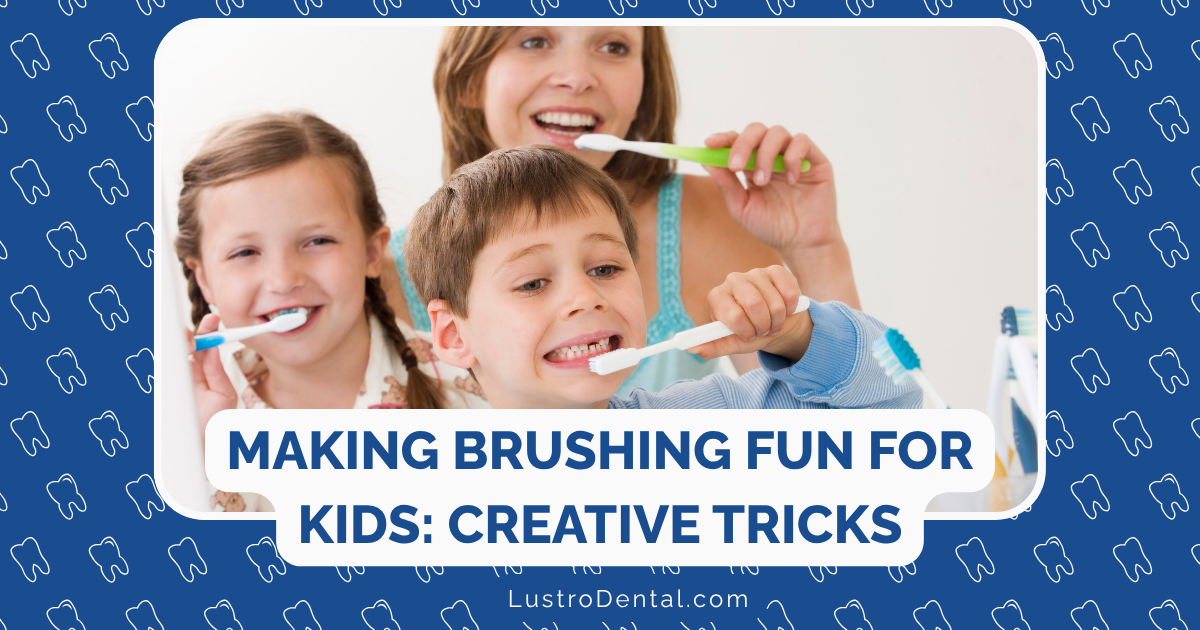
“Brush your teeth!”
For many parents, this simple phrase triggers an immediate sense of dread. The negotiations. The tears. The flat-out refusals. If turning toothbrushing into a twice-daily battle has you exhausted, you’re not alone.
The good news? Brushing doesn’t have to be a struggle. With the right approach, this essential health habit can transform from a dreaded chore into something your child actually looks forward to. As a dental health advocate, I’ve gathered the most effective, creative approaches that real parents and dental professionals swear by—techniques that not only make brushing fun but also establish healthy habits that will benefit your child for life.
Before diving into solutions, let’s understand why getting kids to brush can be so challenging:
The key to success lies in working with these realities rather than against them. Let’s explore creative approaches that address these challenges head-on.
In today’s digital world, technology offers powerful tools to transform brushing from boring to brilliant.
Augmented reality (AR) apps overlay digital elements onto the real world through your smartphone camera, creating an immersive experience that captivates kids.
Pokémon Smile has revolutionized brushing for many families. This free app uses your phone’s camera to show your child fighting cavity-causing bacteria (visualized as cute but mischievous creatures) with their toothbrush. Successful brushing rewards kids with the chance to catch Pokémon. The app tracks brushing movements and ensures all areas of the mouth receive attention.
“My son went from hiding under the bed at brushing time to asking if he could brush his teeth,” shares Maria, mother of a 5-year-old. “He’s caught 43 Pokémon so far and knows exactly how many more he needs for his collection.”
Other standout AR brushing apps include:
Smart toothbrushes connect to apps via Bluetooth to track brushing habits and provide real-time feedback.
The Philips Sonicare for Kids Connected pairs with an app featuring a character named Sparkly who gets happier as children brush better. The brush vibrates when it’s time to move to a different quadrant of the mouth, teaching proper technique while making it fun.
“The investment in a smart toothbrush was absolutely worth it,” notes Dr. Sarah Johnson, pediatric dentist at Children’s Dental Health. “I can immediately tell which of my patients use them by how thoroughly they’re brushing.”
Even without specialized equipment, timer apps can transform brushing time:
For many children, especially those with sensory sensitivities, the physical experience of brushing can be uncomfortable. These approaches make the sensory aspects more appealing:
Standard mint toothpaste can be overwhelming for young taste buds. Fortunately, kid-friendly options have expanded dramatically:
“Let your child select their toothpaste flavor,” suggests Dr. Michael Chen of Bright Smiles Pediatric Dentistry. “When they have ownership over the choice, they’re more invested in using it.”
Just ensure any toothpaste you choose contains fluoride and has the American Dental Association (ADA) seal of approval.
The humble toothbrush has evolved far beyond the basic manual stick:
“My daughter refused to brush until we got her a brush that lights up and plays the ‘Baby Shark’ song,” says Thomas, father of a 3-year-old. “Now she asks to brush her teeth every night.”
For children with sensory processing differences, these modifications can make brushing more comfortable:
Children live in a world of imagination. Tapping into their natural creativity can transform brushing from a chore into an adventure.
Create stories where brushing plays a central role:
“We pretend my son’s mouth is a car wash and his teeth are dirty cars,” explains Jamal, father of a 4-year-old. “The toothbrush is the washing machine that makes them sparkly clean. He loves making car noises as we brush each ‘vehicle.'”
Puppets can be powerful allies in making brushing fun:
“Our alligator puppet ‘Chompy’ has revolutionized our brushing routine,” shares Emily, mother of twins. “The kids brush Chompy’s teeth, then Chompy helps brush theirs. They giggle through the entire process.”
Designate a special stuffed animal or toy as a “brushing buddy”:
Music engages different parts of the brain and can make time pass more quickly while making activities more enjoyable.
Create a special playlist of two-minute songs exclusively for brushing time:
Popular brushing songs include:
Who says brushing has to be stationary? Try:
“We do what we call ‘brush and boogie’ in our house,” says Latisha, mother of three. “We put on a favorite song and dance around the bathroom while brushing. My kids actually look forward to it now.”
While intrinsic motivation is the ultimate goal, reward systems can be effective bridges to establishing habits.
Create visual representations of brushing success:
“We created a ‘Cavity Fighters’ chart with our kids’ favorite superheroes,” explains Carlos, father of two. “Each successful brushing earns them a sticker. After collecting 14 stickers in a week, they get to choose a small reward.”
Not all rewards need to be toys or treats:
“In our family, the weekly ‘Brushing Champion’ gets to be the first to share at dinner and chooses our weekend activity,” shares Aisha, mother of four. “The kids are incredibly motivated by having this special recognition and privilege.”
Humans are social creatures, and this can be leveraged to make brushing more appealing.
Turn brushing into a family event:
“We have ‘Toothy Time’ every morning and night where all four of us brush together,” says Miguel, father of two. “We make silly faces in the mirror and see who can make the most bubbles. The kids love it because it’s quality time together, not just a hygiene task.”
For children with distant relatives or friends:
“My daughter resisted brushing until we started occasional FaceTime brushing sessions with her cousins,” notes Priya, mother of a 5-year-old. “Now she asks if she can ‘brush with Auntie’ on nights when she’s feeling particularly resistant.”
Sometimes, changing the environment can transform the brushing experience.
Create a bathroom space that makes brushing appealing:
Appeal to multiple senses:
While these strategies work for most children, some may have deeper issues with brushing:
If your child continues to struggle despite trying multiple approaches, consider consulting:
The most effective approach to making brushing fun combines consistency with creativity. Children thrive on routine but engage through novelty. By establishing a regular brushing schedule while continuously introducing fresh, engaging elements, you can transform this essential health habit from a battleground into a highlight of your child’s day.
Remember that your ultimate goal isn’t just clean teeth today—it’s establishing lifelong habits that will protect your child’s smile for decades to come. The creativity and patience you invest now will pay dividends in your child’s future oral health.
What creative approaches have worked for your family? Share your success stories in the comments below!
Start wiping your baby’s gums with a soft cloth even before teeth emerge. Begin brushing as soon as the first tooth appears, typically around 6 months of age.
Look for clean teeth with no visible food particles or plaque. Many of the apps mentioned above can help track brushing effectiveness. Regular dental check-ups will also confirm if brushing is adequate.
Try alternating—let them brush independently for a while, then take a turn to “check for sugar bugs.” Gradually increase their independence while maintaining supervision until around age 7-8.
Many children find electric toothbrushes more fun and engaging. They can also be more effective at removing plaque, especially for children with limited dexterity. However, a manual brush used properly is perfectly adequate.
Start with a very soft brush and gentle pressure. Consider alternatives like silicone finger brushes or three-sided brushes that reduce brushing time. Gradual exposure and occupational therapy techniques can help increase tolerance over time.