🦷 General Care
✨ Treatments
👶 Family Care
💚 Wellness
💡 Resources

🦷 General Care
✨ Treatments
👶 Family Care
💚 Wellness
💡 Resources

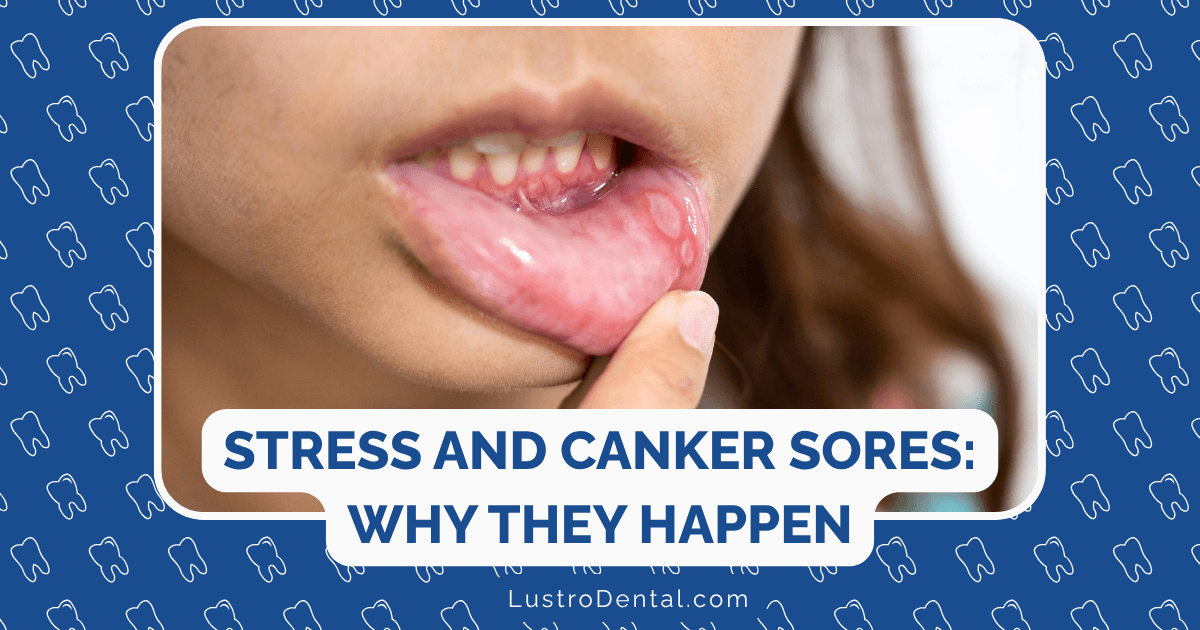
That familiar burning sensation. The painful sting when you take a bite of food. The small, round ulcer that seems to appear at the most inconvenient times. If you’re among the estimated 25% of the population who suffers from canker sores, you know exactly what I’m describing—and you’re likely all too familiar with how these small ulcers can cause significant discomfort.
As a dental health advocate, I’ve observed a clear pattern among my readers: canker sores often flare up during periods of heightened stress and anxiety. This connection isn’t coincidental—it’s supported by scientific research that reveals the complex relationship between our emotional well-being and oral health.
In this comprehensive guide, we’ll explore the stress and canker sores connection, evidence-based prevention strategies, and the most effective treatments to provide relief when these painful ulcers do appear.
Before diving into the stress connection, let’s clarify what canker sores actually are. Canker sores (medically known as aphthous ulcers or recurrent aphthous stomatitis) are small, shallow lesions that develop on the soft tissues inside your mouth—typically on the inner cheeks, lips, tongue, gums, or the base of your gums.
According to research published by the National Center for Biotechnology Information, approximately 85 out of 100 people with canker sores experience minor aphthous ulcers, which:
It’s important to distinguish canker sores from cold sores (fever blisters), which are caused by the herpes simplex virus and appear on the outside of the mouth. Unlike cold sores, canker sores:
Dr. Sarah Johnson, a leading oral pathologist, explains: “Canker sores represent a form of inflammatory response in the oral mucosa. While they may seem simple, they involve complex interactions between the immune system, oral microbiome, and various triggering factors—including psychological stress.”
The link between stress and canker sores is well-documented in scientific literature. A study published in Contemporary Clinical Dentistry, referenced by Hawaii Family Dental, found significantly higher levels of anxiety and depression in individuals with recurrent canker sores compared to control groups.
Several mechanisms explain how psychological stress can manifest as these painful oral lesions:
When we experience stress, our bodies release cortisol and other stress hormones that can alter immune function. According to an article in Time Magazine, this immune activation can trigger inflammatory responses in the mouth, potentially leading to canker sore formation.
Dr. Michael Chen, immunologist, notes: “Stress doesn’t just feel bad psychologically—it creates measurable changes in immune regulation, particularly in mucosal tissues like those lining the mouth.”
Stress often leads to behaviors that indirectly increase canker sore risk:
Chronic stress impairs the body’s natural healing processes, potentially extending the duration and severity of canker sores once they form.
Stress alters hormone levels throughout the body, which may explain why women are more likely to experience canker sores during certain phases of their menstrual cycle or during particularly stressful life periods.
While stress is a significant trigger, canker sores often result from a combination of factors. Understanding your personal triggers is key to effective prevention:
Try this: Keep a “canker sore journal” for 2-3 months, noting when sores appear and potential triggers (stress levels, foods eaten, oral injuries, etc.). Patterns often emerge that can guide your prevention strategy.
Preventing stress-induced canker sores requires a two-pronged approach: managing stress effectively and optimizing oral health. Let’s explore evidence-based strategies for each:
Research published in the Journal of Oral Pathology & Medicine demonstrates that regular mindfulness practice can reduce inflammatory markers associated with canker sore formation.
Try this: Start with just 5 minutes daily of focused breathing. Sit comfortably, close your eyes, and pay attention to your breath. When thoughts arise (as they inevitably will), gently return your focus to your breathing. Gradually increase duration as the practice becomes familiar.
Regular exercise reduces stress hormones while increasing endorphins—natural mood elevators that can help break the stress-canker sore cycle.
Try this: Aim for 30 minutes of moderate activity most days. This doesn’t require a gym membership—brisk walking, dancing to music, or following along with free online workout videos all count.
Poor sleep exacerbates stress and weakens immune function, creating ideal conditions for canker sores to develop.
Try this: Create a consistent sleep schedule and bedtime routine. Limit screen time before bed, keep your bedroom cool and dark, and consider relaxation techniques like progressive muscle relaxation if you struggle with falling asleep.
Changing how you think about stressors can reduce their physiological impact.
Try this: When facing a stressful situation, ask yourself: “Will this matter in five years?” and “What’s the worst that could realistically happen?” These questions can help put stressors in perspective.
According to the Cleveland Clinic, how you clean your mouth matters as much as how often you do it.
Try this:
Nutrition plays a dual role in canker sore prevention: avoiding trigger foods and ensuring adequate nutrients for oral tissue health.
Try this:
Physical barriers can help prevent irritation that might lead to canker sores.
Try this:
Despite our best prevention efforts, canker sores sometimes occur, particularly during unavoidable stressful periods. When they do, these evidence-based treatments can help manage pain and accelerate healing:
A simple solution of 1/2 teaspoon salt in warm water can reduce bacteria, promote healing, and provide temporary pain relief.
How to use: Rinse for 30 seconds, 3-4 times daily. Do not swallow.
Research published in the International Journal of Oral and Maxillofacial Surgery found that applying honey to canker sores reduced pain duration and accelerated healing compared to conventional treatments.
How to use: Apply a small amount of raw, unpasteurized honey directly to the sore up to 4 times daily. Hold in place for 2-3 minutes before rinsing.
A 1:1 mixture of hydrogen peroxide and water can help clean the area and reduce bacterial load.
How to use: Apply directly to the sore using a cotton swab, then rinse with water. Limit to 1-2 applications daily to avoid irritation.
Direct application of ice can temporarily numb pain and reduce inflammation.
How to use: Hold a small ice cube against the sore until the area becomes numb (usually 5-10 minutes). Repeat as needed for pain relief.
Products containing benzocaine, lidocaine, or diphenhydramine can provide temporary pain relief.
How to use: Apply according to package directions, typically 3-4 times daily before meals and at bedtime.
Over-the-counter products that form a protective film over the sore can shield it from further irritation.
How to use: These typically come as patches, gels, or pastes that adhere to the mucous membrane. Apply after meals and before bed.
Non-steroidal anti-inflammatory drugs (NSAIDs) like ibuprofen can reduce pain and inflammation.
How to use: Take as directed on the packaging. These work systemically rather than locally.
For canker sores that are particularly large, numerous, or slow to heal, professional interventions may be necessary:
Tetracycline suspension or “magic mouthwash” (a custom mixture that may include antihistamines, local anesthetics, and corticosteroids) can provide relief for multiple or severe sores.
These reduce inflammation and accelerate healing for major canker sores.
For extremely painful or persistent sores, a healthcare provider may use chemical, laser, or electrical cauterization to seal the sore and provide immediate pain relief.
In cases of recurrent, severe outbreaks, doctors may prescribe systemic medications like oral steroids, immunosuppressants, or newer biologic drugs.
According to a research update, a medication called apremilast, typically used for psoriasis, has shown promise for severe canker sores due to its anti-inflammatory properties.
Children may experience canker sores differently than adults:
Tips for parents:
Hormonal fluctuations during pregnancy can increase susceptibility to canker sores:
Aging brings unique considerations:
While most canker sores heal on their own, certain situations warrant professional attention. According to UF Health, contact your healthcare provider if:
Many individuals have successfully managed stress-induced canker sores by implementing comprehensive prevention strategies:
Case Study: Michael’s Journey
Michael, a 42-year-old attorney, had suffered from recurrent canker sores during high-stress work periods for over a decade. After keeping a detailed journal, he identified three key triggers: work deadlines, inadequate sleep, and consumption of acidic foods during stressful periods.
His personalized prevention plan included:
After six months, Michael’s canker sore occurrences decreased by approximately 80%, and when sores did develop, they were smaller and healed more quickly.
Case Study: Jennifer’s Approach
Jennifer, a 35-year-old teacher and mother of two, developed severe canker sores during particularly stressful periods at work and home. Her integrated management plan included:
Within three months, Jennifer’s canker sore frequency decreased dramatically, and she reported feeling more equipped to manage both her oral health and overall stress levels.
The connection between stress and canker sores highlights the inseparable relationship between our emotional well-being and physical health. By addressing both psychological stressors and oral health factors, you can significantly reduce the frequency and severity of these painful ulcers.
Remember that consistency is key—implementing stress management techniques only during active outbreaks is less effective than maintaining regular practices that support overall resilience. Similarly, optimal oral care should become a daily habit rather than a reactive measure.
With the evidence-based prevention strategies and treatment approaches outlined in this guide, you can break the stress-canker sore cycle and enjoy greater oral comfort, even during life’s inevitable stressful periods.
Your oral health deserves attention and care, particularly during challenging times. By understanding the mind-mouth connection and implementing targeted interventions, you can protect yourself from the pain and disruption of stress-induced canker sores.
Have you noticed a connection between stress and canker sores in your own experience? What prevention or treatment approaches have worked best for you? Share your experiences in the comments below.