🦷 General Care
✨ Treatments
👶 Family Care
💚 Wellness
💡 Resources

🦷 General Care
✨ Treatments
👶 Family Care
💚 Wellness
💡 Resources

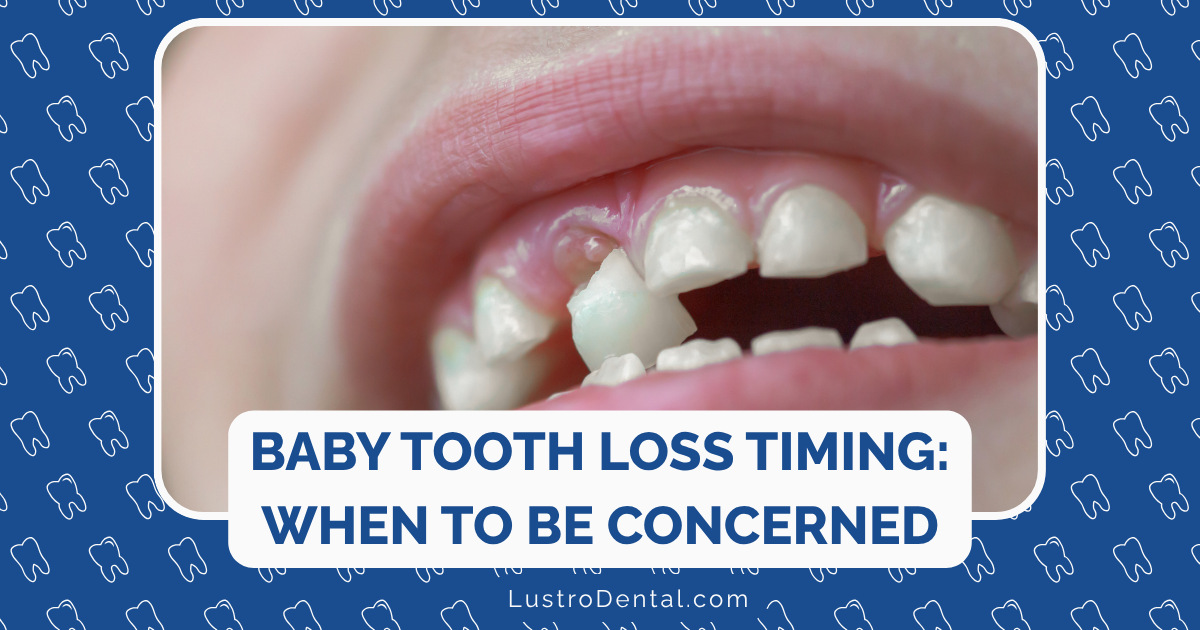
That wiggly tooth, the excitement of an impending visit from the tooth fairy, the slightly gappy smile in school photos—losing baby teeth is a cherished childhood milestone that most parents look forward to documenting. But what happens when this process doesn’t follow the expected timeline? When teeth fall out too soon, or seem to be hanging on far longer than they should?
As someone who’s passionate about dental health education, I’ve spoken with many concerned parents about these variations in dental development. The good news is that in many cases, slight deviations from the “average” timeline are completely normal. However, there are situations that warrant attention and possibly intervention.
Let’s explore what parents should know about early and late primary tooth loss, when to be concerned, and what treatments might be recommended.
Before we discuss what’s “too early” or “too late,” it helps to understand the typical pattern of tooth loss and eruption.
Most children begin losing their primary (baby) teeth around age 6, though this can range from 5 to 7 years. The process generally follows this pattern:
The entire process of replacing all 20 primary teeth with permanent teeth typically takes 5-7 years, meaning most children finish around age 12-13.
Dr. Sarah Johnson of the American Academy of Pediatric Dentistry explains: “This timeline is just an average. Variations of 6-12 months in either direction are considered normal and usually don’t require intervention.”
Under normal circumstances, baby teeth fall out because their roots dissolve (resorb) as the permanent teeth develop and push upward. This process, called physiologic root resorption, causes the baby tooth to become loose over time until it eventually falls out, making way for the permanent tooth to emerge.
Early loss of primary teeth is generally defined as losing a tooth significantly before the permanent tooth underneath is ready to erupt—typically more than a year ahead of schedule.
Children are active and accidents happen. Falls, sports injuries, and other impacts can knock out baby teeth prematurely. According to the American Dental Association, dental trauma accounts for up to 39% of all dental emergencies in children.
Despite being temporary, baby teeth can develop cavities that, if left untreated, may progress to severe decay requiring extraction. The Centers for Disease Control and Prevention reports that about 20% of children aged 5-11 have at least one untreated decayed tooth.
Though less common in children than adults, periodontal disease can affect the supporting structures of teeth, potentially leading to premature tooth loss.
Certain systemic conditions can affect tooth development and retention, including:
Some children are born with fewer teeth than normal (hypodontia) or may have structural abnormalities that affect tooth stability.
When a baby tooth is lost too soon, several issues can develop:
Baby teeth serve as placeholders for permanent teeth. When they’re lost early, adjacent teeth may drift into the empty space, reducing the room available for the permanent tooth to emerge.
Dr. Michael Chen, pediatric dentist at Children’s Dental Health Associates, notes: “Within just a few months of early tooth loss, we can see significant shifting of neighboring teeth, which may lead to crowding, impaction, or misalignment of the permanent teeth.”
Without the proper path maintained by the baby tooth, permanent teeth may erupt in the wrong position or become impacted (unable to fully emerge).
Shifting teeth can lead to malocclusion (improper bite), which may affect chewing, speaking, and overall dental health.
Early loss of front teeth, in particular, might temporarily affect speech development, especially for sounds like “th,” “s,” and “z.”
While perhaps less medically significant, the aesthetic impact of missing teeth—especially front teeth—for extended periods can affect some children’s confidence and social interactions.
If your child loses a baby tooth prematurely, your dentist may recommend one of the following interventions:
These dental appliances are designed to hold open the space left by a lost tooth until the permanent tooth is ready to emerge. They come in several forms:
Research published in the Journal of Clinical Pediatric Dentistry shows that space maintainers can significantly reduce the orthodontic complications associated with premature primary tooth loss.
In cases where multiple front teeth are lost early, especially due to trauma, a pediatric partial denture might be recommended. These removable appliances replace the missing teeth for aesthetic and functional purposes until the permanent teeth erupt.
Delayed shedding of primary teeth occurs when baby teeth remain in place well beyond their expected exfoliation time, typically more than a year past the average age.
Sometimes, a permanent tooth may be congenitally missing (never develops). Without the permanent tooth pushing on the roots, the baby tooth may remain indefinitely.
The permanent tooth may be present but unable to erupt due to:
In some cases, the root of a primary tooth fuses directly to the surrounding bone (ankylosis), preventing normal mobility and exfoliation.
Some children simply develop at a slower rate than average, which can affect dental development along with other growth patterns.
Family patterns often influence dental development timing. If parents experienced late loss of primary teeth, their children may follow a similar pattern.
When baby teeth stay too long, several complications can arise:
Permanent teeth may be forced to erupt in abnormal positions, such as behind or in front of the retained primary tooth, leading to a “double row” appearance sometimes called “shark teeth.”
Permanent teeth may become impacted (trapped beneath the gum line), potentially leading to cysts or damage to adjacent teeth.
Misguided permanent teeth may begin resorbing the roots of neighboring teeth instead of their intended predecessors.
Improper tooth alignment can affect bite function and aesthetics, potentially requiring more extensive orthodontic treatment later.
The overall development of the permanent dentition may be delayed, affecting facial growth and dental function.
If your child’s baby teeth are not falling out on schedule, your dentist might recommend:
In many cases, especially if the delay is mild, watchful waiting with regular dental check-ups is the appropriate approach.
If a primary tooth is significantly delayed in falling out and is interfering with the eruption of the permanent tooth, extraction may be recommended.
Dr. Lisa Williams of Pediatric Dental Specialists explains: “We typically consider extraction when we can see on X-rays that the permanent tooth is developing normally and is being prevented from erupting by the persistent baby tooth.”
An orthodontic assessment may be recommended to evaluate the overall development of the dentition and determine if intervention is needed to guide the eruption of permanent teeth.
While variations in the primary tooth loss timeline are often normal, certain situations warrant professional evaluation:
While some factors affecting tooth loss timing are beyond parental control, several preventive measures can help maintain healthy dental development:
Understanding the connection between baby teeth and their permanent successors helps explain why proper care and timing matter so much.
Primary teeth serve as guides for permanent teeth, helping them erupt in the proper position. When this guidance is disrupted—either through early loss or prolonged retention—the permanent teeth may not find their intended path.
The patterns established during the transition from primary to permanent dentition often influence lifelong dental health. Addressing issues during this critical period can prevent more complex problems later.
Dr. James Wilson of the American Association of Orthodontists notes: “The mixed dentition period—when both primary and permanent teeth are present—is an ideal time for evaluation. Many developmental issues can be addressed more effectively during this stage than after all permanent teeth have erupted.”
Early tooth loss in this age group is almost always premature and warrants evaluation. Space maintainers may be particularly important for back teeth lost at this age, as the permanent replacements won’t arrive for several years.
This is typically when the normal transition begins. Variations are common, but significant deviations from the expected pattern should be evaluated.
By this age, most children should be well into the transition process. Persistent primary teeth, especially if permanent teeth are erupting around them in abnormal positions, may require intervention.
Any remaining primary teeth at this age should be evaluated. They may be retained due to missing permanent teeth or impaction issues that require orthodontic or surgical management.
Beyond the clinical considerations, it’s worth acknowledging the social and emotional aspects of tooth loss timing.
Children who lose teeth significantly earlier or later than their peers may feel self-conscious or anxious. Open, positive communication about individual differences in development can help normalize these variations and reduce anxiety.
For some children, creating special traditions around primary tooth loss—regardless of when it happens—can help make the experience positive regardless of timing.
While there are general patterns and timelines for dental development, each child’s journey is unique. Genetic factors, overall health, and individual growth patterns all influence when baby teeth fall out and permanent teeth emerge.
The key for parents is to stay informed, maintain regular dental check-ups, and seek evaluation when significant deviations from the expected pattern occur. With proper monitoring and timely intervention when necessary, most children can achieve healthy, functional, and aesthetically pleasing dentition regardless of whether their baby teeth fall out “on schedule.”
Remember that dental professionals have extensive experience with the wide range of normal variation in dental development. When in doubt, a consultation can provide reassurance and, if needed, a plan to address any concerns—ensuring your child’s smile develops beautifully, even if it follows its own unique timeline.
Has your child experienced early or late loss of baby teeth? Share your experiences or questions in the comments below!