🦷 General Care
✨ Treatments
👶 Family Care
💚 Wellness
💡 Resources

🦷 General Care
✨ Treatments
👶 Family Care
💚 Wellness
💡 Resources

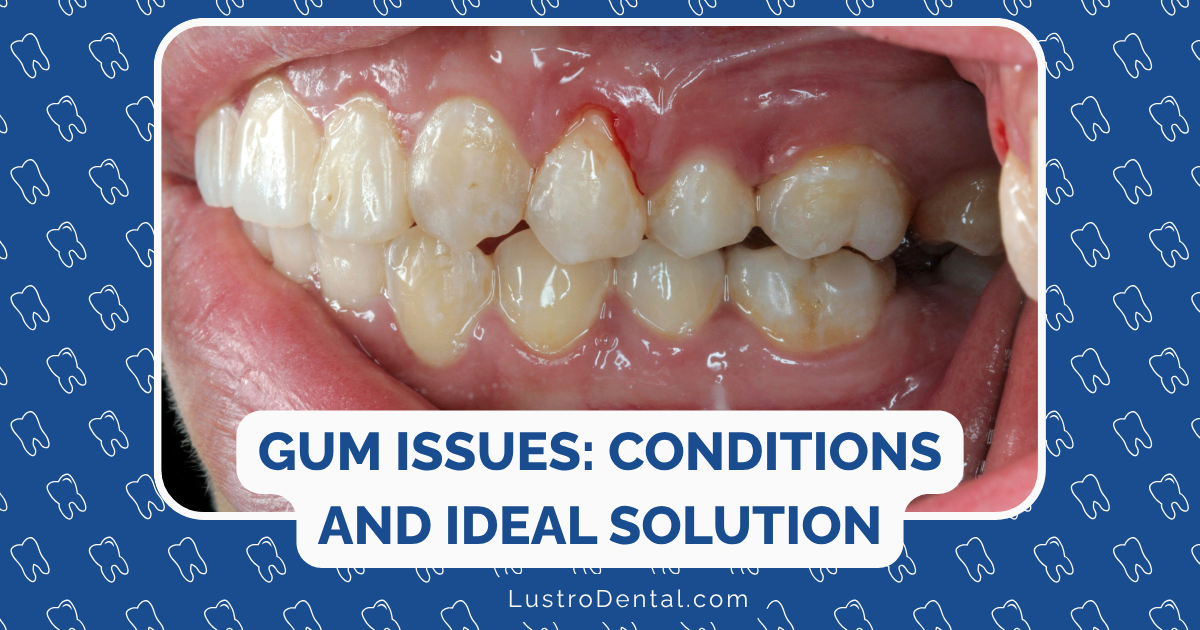
When it comes to gum issues, many people assume that all problems are created equal. However, two of the most common gum concerns—recession and excess tissue—are actually opposite conditions requiring completely different approaches. As a dental health advocate, I’ve seen how confusing these issues can be for patients, often leading to delayed treatment or inappropriate self-care attempts.
Understanding the distinction between these conditions is crucial for proper diagnosis and treatment. Let’s explore the key differences between gum recession and excess gum tissue, and the specific solutions each requires.
Gum recession occurs when the gum tissue pulls away from the teeth, exposing more of the tooth structure and sometimes the root surface. This creates a “long tooth” appearance and can lead to significant dental problems if left untreated.
According to the Cleveland Clinic, approximately 88% of people over the age of 65 have gum recession on at least one tooth, making it an extremely common dental concern.
The signs of gum recession often develop gradually, but may include:
Several factors can contribute to gum recession:
Unlike some dental issues, gum recession cannot be reversed naturally—the tissue won’t grow back on its own. However, several treatment options can address the problem:
For mild recession caused by periodontal disease, a deep cleaning procedure called scaling and root planing may be recommended. This non-surgical treatment removes plaque and tartar from below the gum line and smooths the root surfaces to promote gum reattachment and prevent further recession.
For more advanced recession, a gum graft (also called a gingival graft) may be necessary. During this procedure, tissue is taken from another area of your mouth (typically the palate) or from a donor source and surgically attached to the area with recession. According to the American Academy of Periodontology, gum grafting is considered the most predictable and long-lasting treatment for significant gum recession.
Types of gum grafts include:
This minimally invasive alternative to traditional gum grafting involves making a small hole in the existing gum tissue, then using special instruments to gently loosen and stretch the gum tissue over the recessed areas.
In cases where bone has been lost, this procedure may be performed alongside gum grafting to encourage both gum tissue and bone regeneration.
On the opposite end of the spectrum is excess gum tissue, often referred to as a “gummy smile.” This condition occurs when too much gum tissue covers the teeth, making them appear short or disproportionate. While not usually a health concern, it can significantly affect smile aesthetics and sometimes impact oral hygiene.
The signs of excess gum tissue are generally more immediately noticeable than recession:
Excess gum tissue can result from several factors:
Unlike gum recession, excess tissue can be effectively addressed with tissue removal procedures:
A gingivectomy is a surgical procedure that removes and reshapes excess gum tissue. Modern approaches include:
According to a study published in the Journal of Periodontology, laser gingivectomy typically results in less post-operative pain and faster healing compared to traditional methods.
While a gingivectomy removes excess tissue, a gingivoplasty focuses on reshaping existing gum tissue to create a more aesthetically pleasing appearance. These procedures are often performed together.
This surgical procedure removes both gum tissue and a small amount of bone to expose more of the tooth surface. It’s particularly useful when excess gum tissue is combined with issues like short clinical crowns or when preparing teeth for restorations.
For gummy smiles caused by a hyperactive upper lip rather than excess tissue, Botox injections into the muscles that control lip movement can provide a temporary solution (typically lasting 3-6 months).
In severe cases where the gummy smile is caused by skeletal issues like vertical maxillary excess, jaw surgery may be recommended, though this is typically reserved for the most pronounced cases.
While gum recession and excess tissue require different treatments, the preventive measures share common ground:
For either condition, early intervention typically leads to better outcomes and less invasive treatment options. Consider consulting a dental professional if:
Because gum recession and excess tissue represent opposite conditions requiring different treatments, proper diagnosis is crucial. What might appear to be “short teeth” could actually be excess gum tissue—or it could be normal-sized teeth that appear short due to wear or other factors.
Only a dental professional can determine the true nature of your gum condition through a comprehensive examination that may include:
Understanding whether you’re dealing with gum recession or excess tissue is the first step toward effective treatment. While both conditions affect the gum line, they require fundamentally different approaches—adding tissue in the case of recession, or removing it in the case of excess.
With proper diagnosis and treatment, both conditions can be effectively managed, restoring both the health and appearance of your smile. If you’re concerned about changes in your gum line or the appearance of your smile, consult with a dental professional who can provide a proper diagnosis and discuss your treatment options.
Remember that gum health is an essential component of overall oral health, and addressing gum issues promptly can prevent more serious dental problems down the road.
Have you experienced gum recession or excess gum tissue? Share your experience or questions in the comments below.