🦷 General Care
✨ Treatments
👶 Family Care
💚 Wellness
💡 Resources

🦷 General Care
✨ Treatments
👶 Family Care
💚 Wellness
💡 Resources

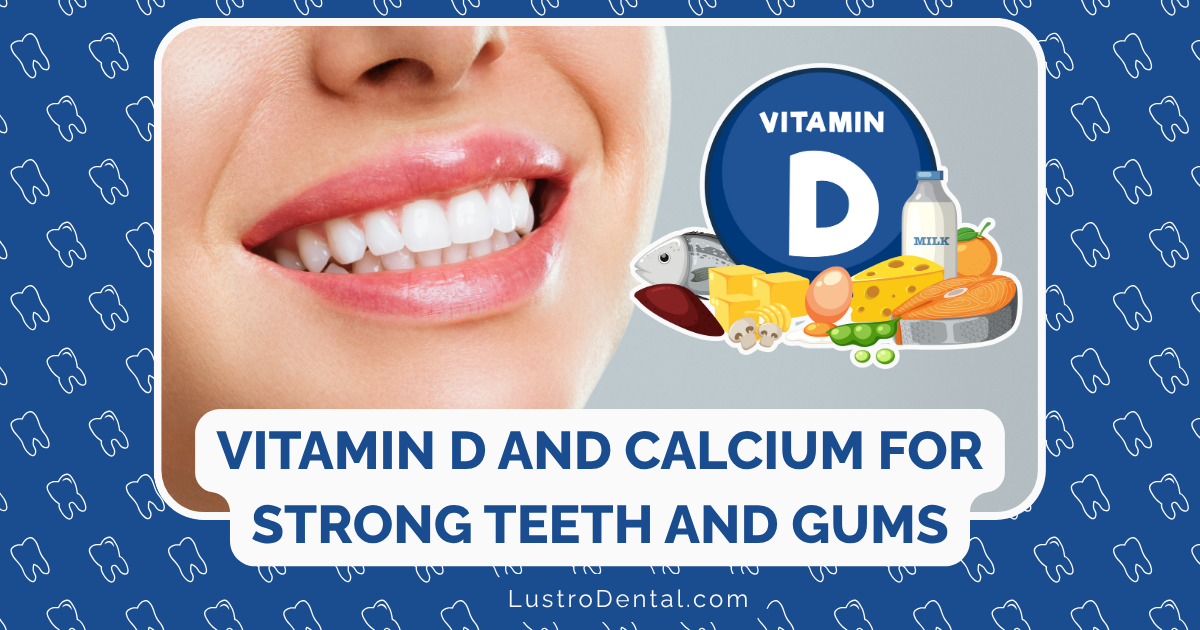
When we think about dental health, brushing, flossing, and regular dental check-ups typically come to mind first. While these practices are undeniably important, there’s another crucial aspect of oral health that often gets overlooked: nutrition. Specifically, vitamin D and calcium play fundamental roles in developing and maintaining strong teeth and healthy gums throughout our lives.
As a dental health advocate, I’ve seen firsthand how nutritional deficiencies can undermine even the most diligent oral hygiene routines. Let’s explore why these two nutrients are so vital for your smile and how you can ensure you’re getting enough of them.
Calcium and vitamin D have a special relationship when it comes to your oral health—they’re essentially partners that can’t function optimally without each other.
Calcium is the most abundant mineral in your body, with about 99% stored in your bones and teeth. In your teeth, calcium forms hydroxyapatite, the mineral complex that gives tooth enamel its strength and hardness. This mineral is what allows your teeth to withstand years of biting, chewing, and temperature changes without wearing down.
But here’s the crucial part: your body cannot effectively use calcium without adequate vitamin D.
Vitamin D serves as a key that unlocks your body’s ability to absorb calcium from your diet. Without sufficient vitamin D:
Research published in the Journal of the American Medical Association found that vitamin D plays a critical role not just in calcium absorption but also in immune function and reducing inflammation—both important factors in gum health.
The effects of vitamin D and calcium extend throughout your entire oral cavity:
Children need adequate amounts of both nutrients during tooth formation. A study in the Journal of Dental Research found that children with vitamin D deficiency had a significantly higher risk of developing enamel defects and cavities.
For adults, these nutrients help maintain tooth mineral density. Your teeth are constantly undergoing a process of demineralization (losing minerals) and remineralization (gaining minerals back). Sufficient calcium and vitamin D help ensure this balance tips toward remineralization.
Vitamin D has powerful anti-inflammatory properties that may help combat periodontal (gum) disease. Research published in the Journal of Periodontology found that individuals with higher blood levels of vitamin D had a lower risk of gum disease.
Additionally, vitamin D activates antimicrobial peptides in your mouth that help fight the bacteria responsible for gum disease and tooth decay.
The alveolar bone—the specialized bone that surrounds and supports your teeth—requires calcium for strength and density. Without enough calcium and vitamin D, this bone can weaken, potentially leading to tooth mobility and even tooth loss over time.
A landmark study in the American Journal of Medicine found that elderly individuals who took calcium and vitamin D supplements had significantly reduced tooth loss compared to those who didn’t take supplements.
Calcium plays a role in maintaining the proper mineral content of your saliva. Calcium-rich saliva helps neutralize acids and remineralize teeth after acid exposure from foods and drinks.
How do you know if you might be deficient in these crucial nutrients? Look out for these warning signs in your mouth:
Remember that these symptoms can have multiple causes, but nutrient deficiencies should be considered as potential contributors.
So how much of these nutrients do you need, and where can you get them?
According to the National Institutes of Health, the recommended dietary allowances are:
Vitamin D:
Calcium:
Vitamin D Sources:
Calcium Sources:
While getting nutrients from food is ideal, supplements may be necessary for some people. Consider supplements if you:
If you decide to supplement, keep these tips in mind:
Optimizing your vitamin D and calcium levels isn’t just about diet and supplements. These lifestyle factors also play important roles:
Physical activity, particularly weight-bearing exercise, helps your body utilize calcium more effectively for bone and tooth health. Activities like walking, jogging, dancing, and resistance training send signals to your body to maintain bone density.
Excessive phosphorus (found in sodas and processed foods) can interfere with calcium absorption. Maintaining a balanced intake of these minerals is important for dental health.
Highly acidic foods and beverages can leach calcium from your teeth. While you don’t need to eliminate them entirely, balance them with alkaline foods like fruits and vegetables.
If you grind or clench your teeth (bruxism), you’re putting extra stress on tooth structures that need adequate minerals to remain strong. Consider discussing this with your dentist if you suspect it’s an issue.
Your needs for vitamin D and calcium change throughout life, with certain periods requiring special attention:
Pregnant women need adequate vitamin D and calcium not only for their own health but for their baby’s developing teeth and bones. A child’s primary teeth begin forming in the womb, and deficiencies during this critical time can have lasting effects.
Research in the Journal of Dental Research found that maternal vitamin D levels during pregnancy significantly influenced their children’s dental health.
The teenage years represent a critical period for bone mass accumulation, with up to 90% of peak bone mass established by age 18. This foundation affects lifelong bone and dental health.
Hormonal changes during menopause can accelerate bone loss, including in the jaw. Women over 50 typically need more calcium, and both men and women need more vitamin D as they age due to decreased absorption efficiency and reduced skin production.
Let me share the story of Maria, a 42-year-old patient who came to me with recurring cavities despite meticulous oral hygiene. After discussing her diet and lifestyle, we discovered she had several risk factors for vitamin D deficiency: she worked long hours indoors, used high-SPF sunscreen whenever outside, and followed a dairy-free diet without appropriate calcium alternatives.
Blood testing confirmed low vitamin D levels. After six months of supervised supplementation and dietary changes, not only did her vitamin D levels normalize, but her dental health improved significantly. The rapid progression of decay stopped, and her gum inflammation decreased noticeably.
Maria’s case illustrates how addressing nutritional deficiencies can complement traditional dental care for optimal results.
Your dentist or dental hygienist can be valuable partners in optimizing your nutritional status for dental health:
Some dental practices now offer salivary pH testing and other assessments that can provide insights into your mineralization status.
Just as a house needs a solid foundation to withstand the elements, your teeth need the foundational support of adequate vitamin D and calcium to remain strong and healthy throughout life. While brushing, flossing, and regular dental visits remain essential, nutrition provides the building blocks that make these practices effective.
By ensuring adequate intake of these crucial nutrients, you’re not just supporting your dental health—you’re investing in your overall wellbeing. Strong teeth and bones, healthy gums, and proper immune function all contribute to quality of life as you age.
Have you experienced improvements in your dental health after addressing vitamin D or calcium intake? Share your story in the comments below.
While vitamin D itself doesn’t directly remineralize teeth, it enables the process by helping your body absorb the calcium necessary for remineralization. Research in the Journal of the California Dental Association suggests that adequate vitamin D levels can support natural remineralization processes, potentially reversing early-stage decay.
Yes. Excessive vitamin D can lead to hypercalcemia (too much calcium in the blood), which may cause kidney stones, calcification of soft tissues, and other serious issues. Most adults should not exceed 4,000 IU of vitamin D daily without medical supervision.
For calcium, the upper limit is typically 2,500 mg daily for adults, with excessive intake potentially linked to kidney stones and cardiovascular issues.
Mild to moderate deficiencies typically begin to improve within weeks of starting supplementation, but it may take 3-6 months to fully replenish stores. Dental benefits may not be immediately apparent but tend to emerge over time as new mineralization occurs.
Children can take age-appropriate supplements when needed, but it’s essential to use products specifically formulated for their age group and to consult with a pediatrician first.