🦷 General Care
✨ Treatments
👶 Family Care
💚 Wellness
💡 Resources

🦷 General Care
✨ Treatments
👶 Family Care
💚 Wellness
💡 Resources

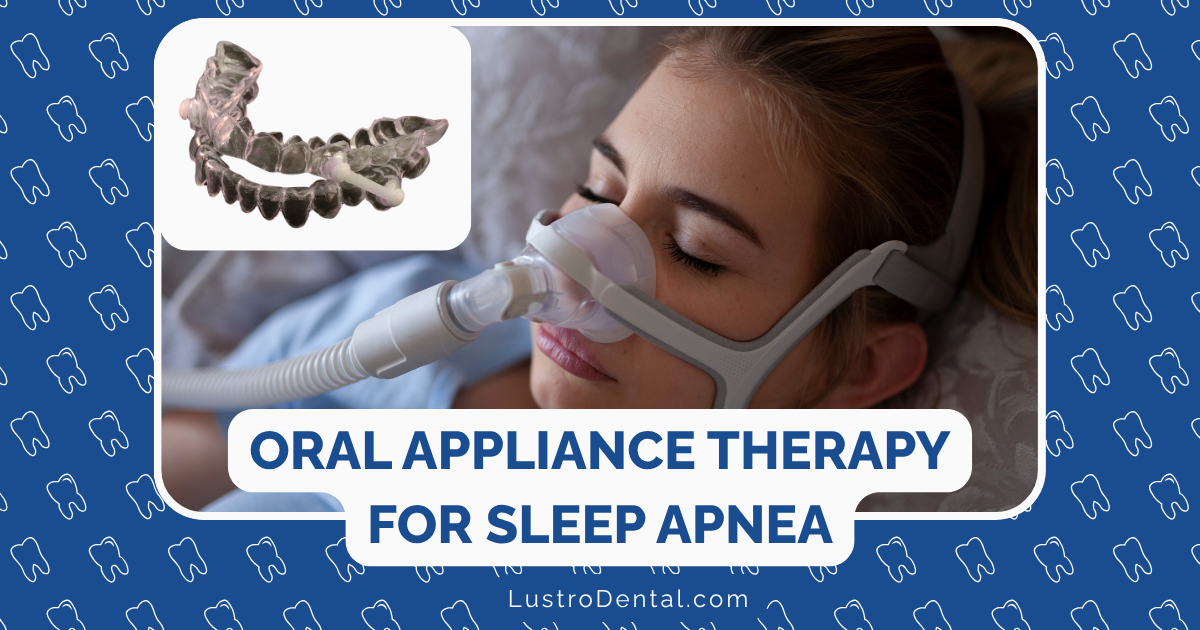
If you’ve been diagnosed with sleep apnea, you know the drill—your doctor likely recommended a CPAP machine as the first line of treatment. But let’s be honest: those masks and tubes aren’t for everyone. Many patients struggle with CPAP therapy, which is why I’m passionate about discussing alternatives that might work better for you. Oral appliance therapy represents one of the most promising CPAP alternatives, offering relief without the hoses and noise that drive many patients to abandon their treatment altogether.
Before we dive into treatment options, let’s take a moment to understand what we’re dealing with. Sleep apnea isn’t just about snoring—though that’s often the symptom that sends worried partners searching for solutions.
Obstructive sleep apnea (OSA) occurs when the muscles in your throat relax during sleep, allowing tissue to block your airway. This interrupts your breathing, sometimes dozens or even hundreds of times per night. Your brain, sensing the oxygen drop, briefly wakes you up to restart breathing—though you may not even remember these awakenings.
These disruptions prevent restorative deep sleep and, over time, increase your risk of serious health problems including heart disease, stroke, and diabetes.
Oral appliance therapy uses custom-fitted devices that look similar to mouthguards but serve a very different purpose. These dental devices are specifically designed to maintain an open airway during sleep by:
Unlike the one-size-fits-all approach of many sleep treatments, oral appliances are custom-made for your mouth by dental professionals with specialized training in sleep dentistry. This customization is crucial—it’s what makes them both effective and comfortable.
There are several varieties of oral appliances available, each with slightly different designs and mechanisms:
The most common type of oral appliance, MADs gently push your lower jaw forward and down slightly, which tightens the soft tissues and muscles of the upper airway to prevent obstruction. These devices typically allow some jaw movement while maintaining the forward position.
These devices hold the tongue in a forward position using a suction bulb, preventing it from collapsing back into the airway during sleep. TRDs may be recommended for people who cannot tolerate MADs or who don’t have enough teeth to support a MAD.
Some newer devices combine features of oral appliances with minimal CPAP components, offering a hybrid approach that may work for patients with more severe apnea who still want something less intrusive than full CPAP therapy.
Let’s address the elephant in the room: CPAP machines are still considered the gold standard for treating sleep apnea, especially severe cases. Clinical studies consistently show that CPAP is more effective at reducing the number of breathing interruptions per hour.
However, effectiveness only matters if you actually use the treatment. This is where oral appliances often shine:
While both treatments are typically covered by insurance when medically necessary, out-of-pocket expenses can vary:
Oral appliances work particularly well for:
However, they might not be the best choice for:
If you’re interested in trying an oral appliance, here’s what to expect:
Many of my patients who struggled with CPAP have found relief with oral appliances. Take Michael, for example, a 45-year-old sales executive who travels weekly. His CPAP machine collected dust while his untreated apnea left him exhausted. After switching to an oral appliance, he not only uses it consistently but has seen his energy levels soar.
Or consider Sarah, who couldn’t tolerate the feeling of a mask on her face due to claustrophobia. Her oral appliance provided an effective alternative that she actually uses every night.
The field of sleep medicine continues to evolve, with researchers working on new approaches to treatment. Some promising developments include:
The American Academy of Sleep Medicine now recognizes oral appliance therapy as a first-line treatment for mild to moderate sleep apnea and an alternative for severe cases when CPAP isn’t tolerated.
Choosing between CPAP and oral appliance therapy is a personal decision that should consider:
Remember that the best treatment is the one you’ll actually use consistently. An oral appliance that you wear every night may be more effective than a CPAP machine that sits in your closet.
If you’re struggling with CPAP therapy or have recently been diagnosed with sleep apnea and are exploring your options, consider scheduling a consultation with a qualified dental sleep medicine practitioner. They can evaluate whether an oral appliance might be right for you.
The most important thing is not to leave sleep apnea untreated. The consequences of untreated sleep apnea are too serious to ignore, but with the variety of treatment options available today, you don’t have to suffer in silence.
Have you tried both CPAP and oral appliance therapy? We’d love to hear about your experience in the comments below.