🦷 General Care
✨ Treatments
👶 Family Care
💚 Wellness
💡 Resources

🦷 General Care
✨ Treatments
👶 Family Care
💚 Wellness
💡 Resources

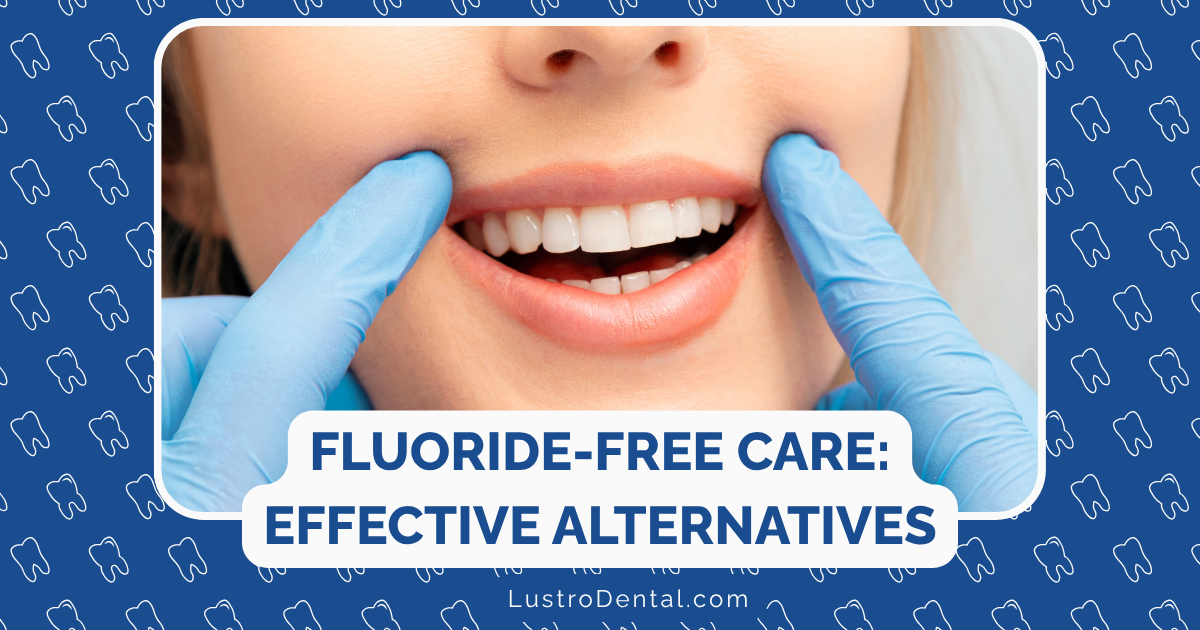
As a dental health advocate, I frequently encounter patients who ask about fluoride-free options for preventing cavities. Whether due to personal preferences, concerns about fluoride, or specific health considerations, the interest in alternatives to conventional fluoride products continues to grow.
But the question remains: Can you effectively prevent cavities without fluoride? And if so, which alternatives actually work?
In this evidence-based evaluation, we’ll explore the most promising fluoride alternatives, examining what the latest research tells us about their effectiveness, limitations, and practical applications.
Before diving into alternatives, it’s important to establish what we’re comparing them against. Fluoride has been the gold standard in cavity prevention for decades, with a substantial body of research supporting its effectiveness.
Fluoride works primarily by:
According to the Centers for Disease Control and Prevention (CDC), community water fluoridation alone reduces tooth decay by about 25% in children and adults. When combined with fluoride toothpaste and professional treatments, the protective effect is even greater.
This sets a high bar for any alternative to meet. Let’s examine how the leading contenders measure up.
Perhaps the most promising fluoride alternative is hydroxyapatite (HAP), a calcium phosphate mineral that makes up approximately 97% of tooth enamel and 70% of dentin.
Unlike most alternatives, hydroxyapatite doesn’t just try to compensate for the absence of fluoride—it takes a fundamentally different approach by mimicking the natural composition of teeth.
A landmark study published in Nature compared 10% hydroxyapatite toothpaste to 500 ppm fluoride toothpaste in a randomized crossover trial. The results were striking: hydroxyapatite performed equally well in remineralizing initial caries and preventing demineralization.
More recently, a 2024 clinical trial involving 610 children found that toothpaste containing biomimetic hydroxyapatite and fluoride was more effective than conventional fluoride toothpaste in reducing enamel lesions and inactivating caries.
Hydroxyapatite functions through several mechanisms:
A 2023 systematic review of 62 clinical trials confirmed hydroxyapatite’s effectiveness for caries prevention, noting that it’s “the most versatile calcium phosphate active ingredient for improving oral health.”
Hydroxyapatite toothpastes typically contain 10-15% hydroxyapatite and are widely available, though they tend to be more expensive than conventional fluoride options. The particle size matters—those smaller than 500 nm are most effective at penetrating and repairing enamel.
For optimal results, hydroxyapatite toothpaste should be used twice daily, and like all toothpastes, it’s best not to rinse immediately after brushing to allow maximum contact time.
Xylitol is a natural sugar alcohol found in small amounts in fruits and vegetables. Unlike regular sugar, it cannot be metabolized by cavity-causing bacteria, making it a popular ingredient in sugar-free gums, mints, and toothpastes.
Research on xylitol shows mixed but promising results. A comprehensive meta-analysis found that regular xylitol consumption (5-10 g/day) can decrease caries incidence by 30% to 80%, with an overall preventive fraction of about 17%.
However, a more recent study from January 2025 cited by Examine.com indicates limited evidence for xylitol’s effectiveness, highlighting the need for further research.
Xylitol provides cavity protection through several mechanisms:
According to research from the University of Colorado, xylitol can decrease acid-producing bacteria in the mouth by up to 90% when used consistently.
For cavity prevention benefits, the recommended dosage is 6-10 grams of xylitol daily, divided into at least three exposures throughout the day. This can be achieved through:
A 2024 systematic review found that xylitol chewing gum was more effective than xylitol candies, particularly in children with moderate to high caries risk.
It’s worth noting that xylitol works best as a complement to good oral hygiene rather than as a standalone cavity prevention strategy.
Bioactive glasses are a group of reactive ceramic materials that release minerals when they come into contact with saliva. The most common types used in dentistry are calcium sodium phosphosilicate (NovaMin) and fluoride-containing bioactive glass (BioMin F).
Research on bioactive glass shows promising results for remineralization and sensitivity reduction. According to a 2024 study published in Nature, BioMin F demonstrated superior antibacterial effects against Streptococcus mutans compared to NovaMin and conventional toothpastes.
A clinical evaluation from Queen Mary University of London found that BioMin F was twice as effective at relieving sensitivity compared to other leading toothpastes, with 90% of users reporting reduced tooth sensitivity.
Bioactive glass functions through several mechanisms:
According to research from the American Ceramic Society, BioMin F incorporates fluoride into the glass structure, allowing for sustained release of fluoride, calcium, and phosphate ions over 8-12 hours after brushing—significantly longer than conventional fluoride toothpastes.
Bioactive glass toothpastes are becoming more widely available, with BioMin receiving FDA clearance for the U.S. market. They’re particularly beneficial for individuals with sensitivity issues or those at high risk for erosion and caries.
For maximum benefit, these toothpastes should be used twice daily, with minimal rinsing after brushing to allow the bioactive glass particles to continue releasing minerals.
Several calcium phosphate formulations have been developed for oral care, including:
A 2023 systematic review analyzed 57 clinical trials on CPP-ACP and found it effective for remineralization, though generally less versatile than hydroxyapatite.
Research from Science Direct indicates that fluoride-doped amorphous calcium phosphate (FACP) can crystallize into fluorohydroxyapatite when in contact with enamel and dentine, enhancing remineralization and inhibiting cariogenic biofilm formation.
These formulations work primarily by:
Calcium phosphate products are available as:
They’re particularly useful for individuals with dry mouth (xerostomia), as the reduced saliva flow limits the natural supply of calcium and phosphate ions.
Various natural substances are marketed as fluoride alternatives, including:
While these natural alternatives have theoretical benefits and some traditional use, the scientific evidence for their effectiveness in preventing cavities is limited compared to the options discussed above.
Coconut oil pulling, for example, may help reduce plaque and gingivitis according to some small studies, but there’s insufficient evidence that it prevents cavities specifically.
Green tea contains compounds called catechins that have shown antibacterial properties against oral pathogens in laboratory studies, but clinical evidence for cavity prevention is preliminary.
These approaches may be best viewed as complementary strategies rather than primary cavity prevention methods.
For many people interested in reducing or eliminating fluoride, the most practical approach may be combining multiple strategies:
While fluoride remains the most well-established cavity prevention method, certain individuals might have valid reasons to explore alternatives:
After reviewing the current research, here’s how the main fluoride alternatives compare:
Evidence Level: Strong Effectiveness: Comparable to fluoride in multiple clinical trials Best For: General cavity prevention, sensitivity reduction, and enamel strengthening Limitations: Higher cost, less long-term data than fluoride
Evidence Level: Moderate Effectiveness: 17-30% reduction in caries when used consistently Best For: Complementary prevention, especially for high-risk individuals Limitations: Requires multiple daily exposures, may cause digestive discomfort in high doses
Evidence Level: Moderate and growing Effectiveness: Promising for remineralization and sensitivity reduction Best For: Targeted protection in high-risk areas, sensitivity management Limitations: Relatively new technology, still accumulating clinical evidence
Evidence Level: Moderate Effectiveness: Good for remineralization, especially in combination with other strategies Best For: Individuals with dry mouth or reduced saliva flow Limitations: Variable formulations with different levels of evidence
Is fluoride-free an option? The answer is a qualified yes—with the right alternatives and approach, it is possible to maintain good oral health without fluoride. Hydroxyapatite stands out as the most promising direct alternative, with substantial clinical evidence supporting its effectiveness.
However, it’s important to recognize that moving away from fluoride may require more diligence and potentially higher costs. The decision should be made thoughtfully, ideally in consultation with your dental professional who understands your specific oral health needs and risk factors.
Remember that cavity prevention is multifactorial—no single product or ingredient can compensate for poor oral hygiene habits or a high-sugar diet. Whatever approach you choose, the foundations of good oral health remain the same: regular brushing and flossing, a tooth-friendly diet, and professional dental care.
Have you tried any fluoride alternatives? What has been your experience? Share your thoughts in the comments below!