🦷 General Care
✨ Treatments
👶 Family Care
💚 Wellness
💡 Resources

🦷 General Care
✨ Treatments
👶 Family Care
💚 Wellness
💡 Resources

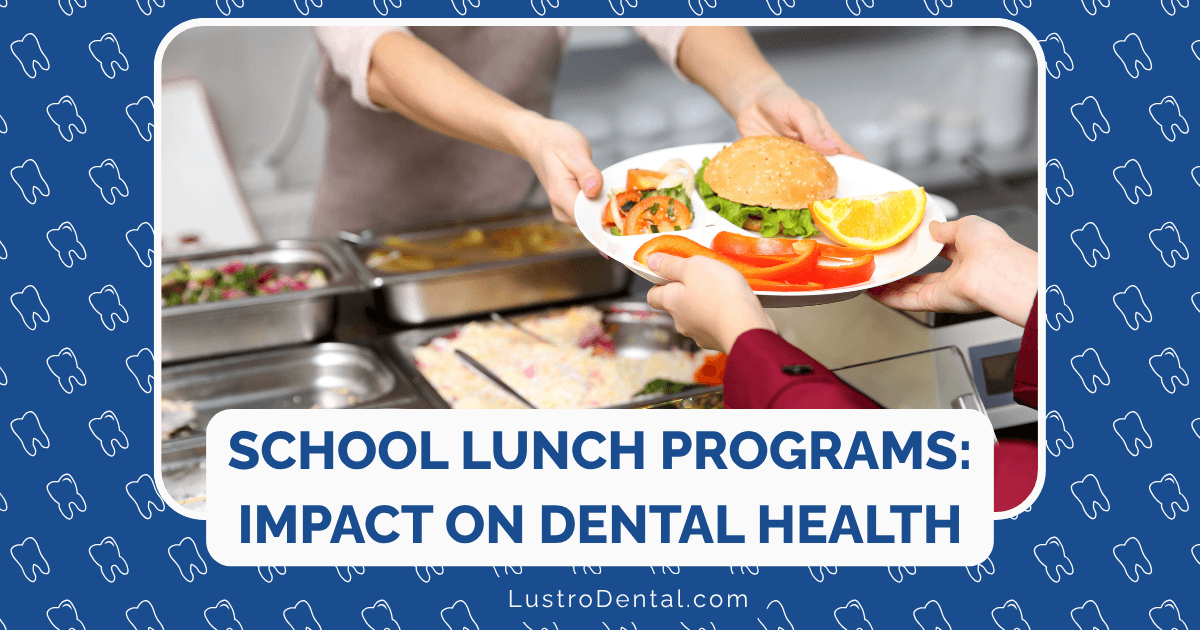
When I visit elementary schools to talk about dental health, I often ask kids what they had for lunch that day. Their answers—pizza, chocolate milk, fruit cups, and cookies—paint a concerning picture for their dental health. While these foods might satisfy hungry students, they’re often secretly undermining the very smiles I’m there to help protect.
The National School Lunch Program serves nearly 30 million children daily, making it one of the most influential factors in many children’s nutritional intake—and by extension, their dental health. What happens in school cafeterias across America isn’t just a matter of satisfying hunger; it’s shaping the future of our children’s oral health.
Let’s start with the science: When children consume sugary foods and drinks, the bacteria in their mouths feast on these sugars and produce acids. These acids attack tooth enamel for up to 20 minutes after eating, gradually weakening it and potentially leading to cavities. According to the Centers for Disease Control and Prevention, tooth decay affects more than half of children aged 6-8 years.
What makes school lunches particularly problematic is the timing. Most students don’t (or can’t) brush their teeth after lunch, meaning those sugars and acids remain in contact with their teeth throughout the afternoon. This extended exposure significantly increases the risk of dental decay.
A typical school lunch tray might include:
Research published in the Journal of the Academy of Nutrition and Dietetics found that 92% of school breakfasts and 69% of lunches contained 10% or more of calories from added sugars—exceeding recommendations from the Dietary Guidelines for Americans.
It’s not just sugar that affects dental health. School lunches often present other challenges:
The dental impact of school lunches doesn’t affect all children equally. According to research published in the National Library of Medicine, there are significant disparities:
For many children, school meals represent their most reliable source of nutrition. This creates a challenging situation where the very programs designed to support children’s health may inadvertently contribute to dental problems—especially for those with limited access to dental care.
The good news is that positive changes are coming. The USDA has finalized new nutrition standards for school meals that will be phased in starting July 1, 2025, with full implementation expected by the 2027-28 school year. These changes directly address some of the dental health concerns:
These changes align with the 2020-2025 Dietary Guidelines for Americans and represent a significant step forward for children’s dental health. The USDA’s School Nutrition Standards Updates provide more detailed information on these upcoming changes.
Despite the challenges, many school districts are already implementing innovative approaches to improve the dental health impact of their meal programs:
Schools that have installed water bottle filling stations and encourage water consumption throughout the day help students rinse away food particles and acids. The CDC’s Water Access in Schools initiative promotes increased water availability in schools.
Schools that offer whole, fresh fruits rather than canned varieties in syrup provide students with the nutritional benefits of fruit with less added sugar and acidity. The fibrous texture of fresh fruits can even help clean teeth as children chew.
Plain milk, cheese, and unsweetened yogurt offer the calcium and protein benefits without the dental downsides of added sugars. Some schools are experimenting with flavoring milk using natural extracts rather than sugar.
The most forward-thinking schools integrate nutrition and dental health education into their lunch programs. Simple table tents with facts about food choices and dental health can help students make connections between what they eat and how it affects their teeth.
If you’re concerned about how school lunches might be affecting your child’s dental health, consider these practical steps:
If you have the resources to pack lunches, focus on:
Even if brushing isn’t possible at school, encourage your child to rinse with water after eating. This simple habit can help remove some food particles and dilute acids.
For older children, consider sending a small dental care kit that includes:
Don’t underestimate your power as a parent to influence school policies:
While individual actions matter, systemic changes will have the greatest impact on children’s dental health. Consider supporting:
Programs that provide free meals to all students regardless of income level have been shown to increase participation and provide opportunities to serve more nutritious foods. The Food Research & Action Center advocates for such policies.
These initiatives connect schools with local farms to serve fresh, minimally processed foods while supporting local agriculture. Learn more from the National Farm to School Network.
Advocate for school-based dental sealant programs, which the CDC identifies as an effective strategy for preventing cavities among schoolchildren.
School lunch programs face the challenging task of balancing many competing priorities: nutrition, affordability, appeal to students, ease of preparation, and now, dental health impacts. The upcoming USDA guidelines represent progress, but real change will require continued attention from parents, educators, health professionals, and policymakers.
As we work toward solutions, let’s remember that the goal isn’t to demonize school meals but to optimize them—to ensure they nourish children’s bodies without compromising their dental health. After all, a healthy smile is essential not just for eating those school lunches but for the confidence and well-being of every child.
What changes would you like to see in your local school’s lunch program? Have you noticed any connection between your child’s school meals and their dental health? Share your experiences and ideas in the comments below.