🦷 General Care
✨ Treatments
👶 Family Care
💚 Wellness
💡 Resources

🦷 General Care
✨ Treatments
👶 Family Care
💚 Wellness
💡 Resources

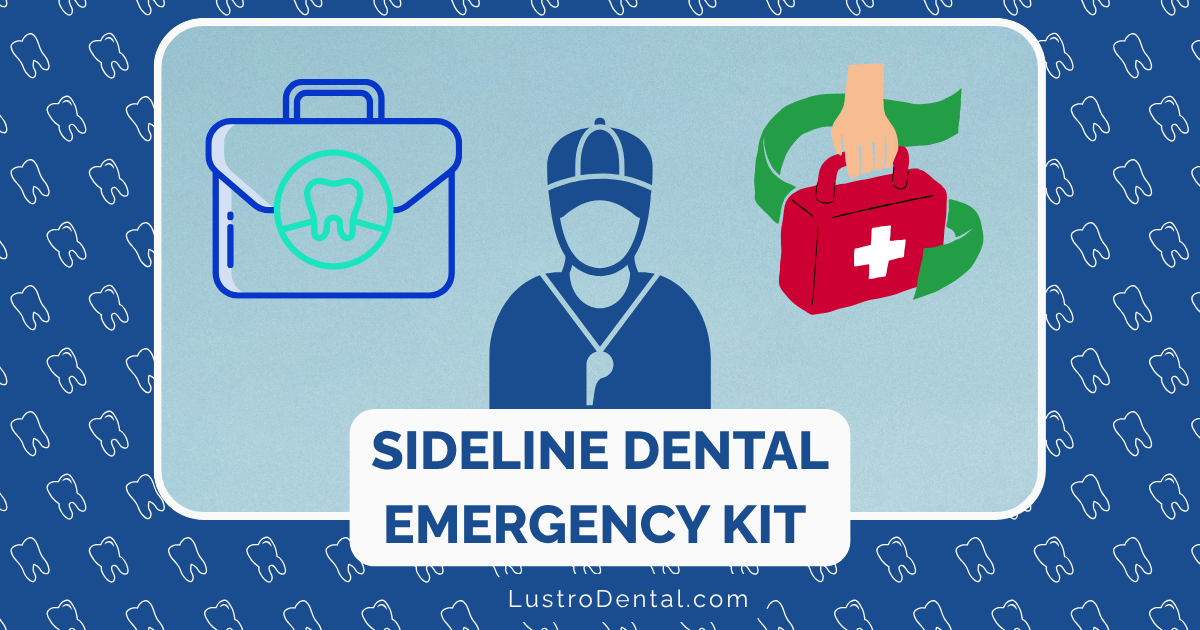
As a coach, you’ve likely witnessed the full spectrum of sports injuries – from minor scrapes to more serious sprains and concussions. But how prepared are you for one of the most common yet often overlooked sports emergencies: dental injuries?
The statistics are eye-opening. According to the American Dental Association, athletes who don’t wear mouthguards are 60 times more likely to suffer dental injuries. Each year, more than 5 million teeth are knocked out in sporting activities, with basketball, baseball, and football accounting for the majority of these injuries.
What’s particularly critical about dental emergencies is the time factor. For example, a knocked-out tooth has the best chance of being saved if it’s properly handled and reimplanted within 30-60 minutes. As a coach on the sidelines, your immediate response can literally be the difference between an athlete keeping or losing their tooth for life.
Let’s build a comprehensive sideline dental emergency kit and establish protocols that could save an athlete’s smile – and potentially thousands of dollars in dental work.
Before diving into the emergency kit contents, it’s important to understand the types of dental emergencies you might encounter:
This is the most time-sensitive dental emergency. An avulsed tooth has been completely displaced from its socket. Proper immediate handling significantly increases the chances of successful reimplantation.
These teeth remain in the socket but are pushed in an abnormal position – either pushed inward, outward, or to the side. These require prompt professional attention.
Teeth can fracture in various ways, from minor chips in the enamel to severe fractures involving the tooth’s pulp (nerve and blood vessels).
Cuts, lacerations, or puncture wounds to the lips, cheeks, tongue, or gums often accompany dental injuries and may require immediate attention to control bleeding.
Though less common, these serious injuries require immediate medical attention.
Dr. James Thompson, team dentist for the National Sports Medicine Institute, emphasizes: “Coaches are often the first responders to dental trauma on the field. Having the right supplies and knowledge can dramatically improve outcomes for injured athletes.”
Your sideline dental kit should be compact, clearly labeled, and easily accessible. Here’s what dental professionals and the National Athletic Trainers’ Association recommend including:
Save-A-Tooth® kit or similar tooth preservation system
Alternative preservation options
Temporary dental cement
Dental wax
Oral anesthetic gel
Cold packs
Sterile gauze pads
Cotton rolls
Tea bags (black tea)
Disposable gloves
Dental mirror
Penlight or small flashlight
Antimicrobial mouth rinse
Dental emergency instruction cards
Medical information forms
Local dental emergency contacts
Proper organization ensures you can quickly access what you need in an emergency:
Dr. Lisa Rodriguez, sports dentistry specialist at Athletic Dental Safety Institute, recommends: “Position your dental emergency kit alongside your standard first aid supplies, but keep it separate. Dental emergencies require specific tools and protocols that shouldn’t be buried among general first aid items.”
Having the right supplies is only part of the equation. Knowing how to use them properly is equally important. Here are step-by-step protocols for handling common dental emergencies:
According to research published in the Journal of Athletic Training, the survival rate for reimplanted teeth drops dramatically after 30 minutes outside the mouth, making immediate action crucial.
Some situations require immediate professional intervention. Transport the athlete for emergency care if:
While having an emergency kit is essential, preventing injuries is always preferable:
Research from the American Academy of Pediatric Dentistry shows that properly fitted mouthguards can reduce the risk of sports-related dental injuries by 60%.
Different sports present different dental injury risks. Here are considerations for commonly coached sports:
Despite being non-contact in theory, these sports account for a significant percentage of dental injuries due to:
Recommendation: Strongly encourage mouthguard use despite lack of mandate.
These sports typically have mandatory mouthguard rules, but compliance and proper fit remain issues.
Recommendation: Verify proper fit of mouthguards and enforce consistent use during practice, not just games.
Facial injuries often result from:
Recommendation: Consider catcher’s masks for all defensive positions in youth leagues.
These sports present unique risks due to:
Recommendation: Double mouthguards (protecting both upper and lower teeth) may be appropriate.
The effectiveness of proper preparation is best illustrated through real examples:
Case Study: High School Basketball Championship During a state championship game, 17-year-old point guard Marcus took an accidental elbow to the mouth, knocking out his front tooth. The coach immediately implemented the proper protocol, retrieving the tooth without touching the root, placing it in the team’s Save-A-Tooth kit, and arranging emergency transport. The tooth was successfully reimplanted, and after proper dental follow-up, Marcus made a full recovery with his natural tooth intact.
Case Study: Youth Soccer Tournament When 12-year-old goalkeeper Sophia collided with a striker and fractured her tooth, her coach’s preparation made all the difference. Using the dental emergency kit, the coach applied dental wax to the sharp edge, controlled bleeding with gauze, and preserved the tooth fragment in milk. The quick response allowed the dentist to bond the fragment back to Sophia’s tooth rather than requiring a more extensive restoration.
Use this checklist to ensure you’re prepared for dental emergencies:
As a coach, your responsibilities extend beyond teaching skills and strategy – you’re often the first responder when injuries occur. A well-prepared dental emergency kit and the knowledge to use it properly can make a dramatic difference in outcomes for your athletes.
Dr. Michael Johnson, former team dentist for the US Olympic Committee, puts it succinctly: “In my decades of sports dentistry experience, I’ve seen countless teeth saved by coaches who were properly prepared. The difference between a coach with a proper dental kit and one without can literally be the difference between an athlete keeping or losing their teeth for life.”
By assembling a comprehensive sideline dental emergency kit and familiarizing yourself with proper protocols, you’re providing an invaluable service to your athletes – one that might not be appreciated until it’s needed, but that can have life-changing implications when dental emergencies occur.
Remember: in dental emergencies, time is tooth. Your preparation and quick action might just save an athlete’s smile.
Have you ever handled a dental emergency on the sidelines? What items would you add to this emergency kit based on your experience? Share your thoughts in the comments below.