Understanding Sedation Options for Children: From Nitrous Oxide to General Anesthesia
As parents, we want dental visits to be positive experiences for our children. Yet for some kids—whether due to anxiety, special needs, extensive treatment requirements, or young age—standard dental appointments can be challenging or even traumatic.
This is where dental sedation options come into play. As someone passionate about dental health education, I’ve seen how appropriate sedation can transform a potentially distressing experience into a manageable one, allowing necessary dental care to proceed while protecting a child’s emotional well-being.
However, the various sedation options available can seem overwhelming to parents. What’s the difference between nitrous oxide and oral sedation? When is general anesthesia necessary? What are the risks involved?
This comprehensive guide will walk you through the spectrum of pediatric dental sedation options, helping you understand when each might be appropriate and what to expect if your child’s dentist recommends sedation.
Before discussing specific options, it’s important to understand why a dentist might recommend sedation for a child. According to the American Academy of Pediatric Dentistry, sedation in pediatric dentistry serves several important purposes:
1. Managing Anxiety and Fear
Dental anxiety affects approximately 5-20% of children, according to research published in the Journal of Dental Anesthesia and Pain Medicine. For these children, even routine cleanings can trigger significant distress.
2. Enabling Treatment for Young Children
Very young children (typically under age 4) may not have the cognitive ability to understand dental procedures or the emotional regulation to remain still during treatment.
3. Facilitating Care for Children with Special Needs
Children with certain medical, physical, or cognitive conditions may benefit from sedation to receive necessary dental care safely and comfortably.
4. Managing Extensive or Complex Treatment
Children requiring multiple or complex procedures might benefit from sedation to complete all necessary treatment in fewer appointments.
5. Preventing Traumatic Experiences
Perhaps most importantly, appropriate sedation can prevent negative dental experiences that might otherwise lead to long-term dental phobia.
Dr. Sarah Johnson, pediatric dentist at Children’s Dental Health Associates, explains: “Our goal is always to provide necessary treatment in the least restrictive manner possible. We start with basic behavior guidance techniques, but when those aren’t sufficient, sedation becomes an important tool to ensure children receive needed care while protecting their psychological well-being.”
The Spectrum of Sedation Options
Dental sedation exists on a spectrum from minimal relaxation to complete unconsciousness. Understanding these different levels helps clarify the various options available:
Levels of Sedation
1. Minimal Sedation (Anxiolysis)
Child is relaxed but fully awake
All protective reflexes remain intact
Child can respond normally to verbal commands
Cognitive function and coordination may be mildly impaired
Breathing and cardiovascular function remain unaffected
2. Moderate Sedation (Conscious Sedation)
Child is drowsy but can still be awakened with verbal commands
Protective reflexes remain largely intact
Child may not remember much of the procedure
Breathing remains adequate, but cardiovascular function may be slightly affected
3. Deep Sedation
Child is difficult to arouse but responds to repeated or painful stimulation
Ability to maintain airway independently may be impaired
Spontaneous ventilation may be inadequate
Cardiovascular function is usually maintained
4. General Anesthesia
Child is completely unconscious
Cannot be aroused even with painful stimulation
Ability to maintain airway independently is often impaired
Spontaneous ventilation is often inadequate
Cardiovascular function may be impaired
Now, let’s explore the specific sedation methods used in pediatric dentistry, from the mildest to the most intensive.
Nitrous Oxide: The Mildest Option
What Is It?
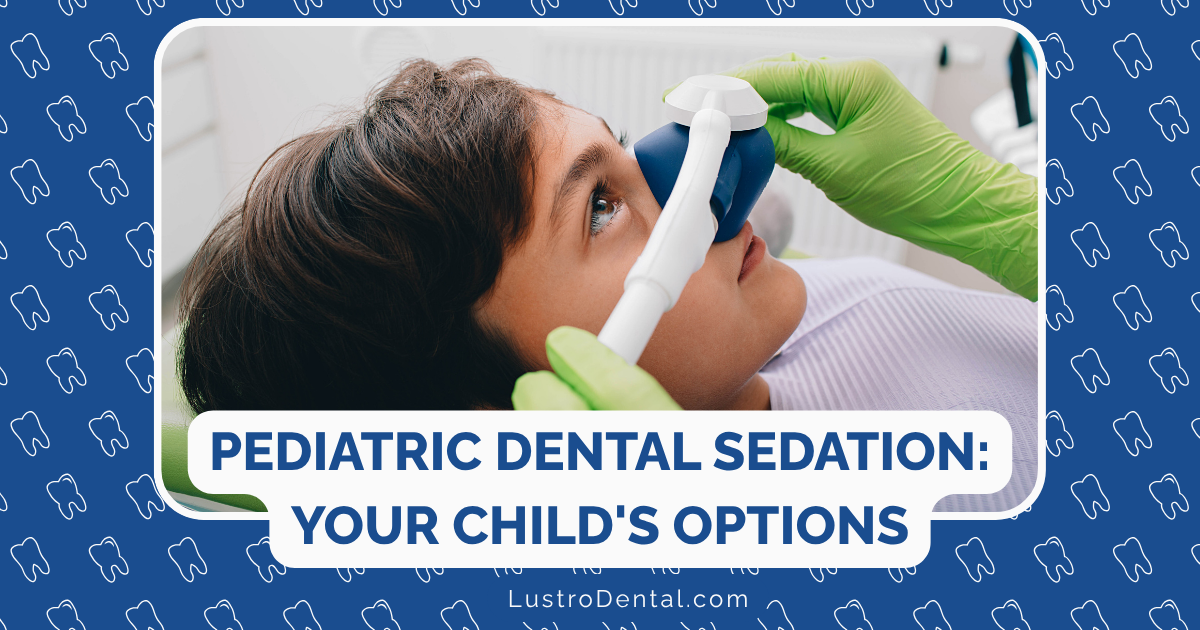
Nitrous oxide, often called “laughing gas,” is a colorless, odorless gas mixed with oxygen and administered through a small mask placed over the child’s nose.
How It Works
Nitrous oxide works quickly to produce a mild calming effect. Children remain awake and can respond to questions and directions, but they feel more relaxed and may experience a sense of euphoria or tingling. The gas is eliminated from the body within minutes after the mask is removed.
Appropriate Uses
Nitrous oxide is suitable for:
Children with mild to moderate anxiety
Cooperative children who need help relaxing
Brief, non-invasive procedures
Children who can breathe through their nose
Children without certain medical conditions (e.g., severe asthma, cystic fibrosis)
Benefits
Rapid onset (takes effect within minutes)
Easily adjustable during treatment
Quick recovery (effects dissipate within 5 minutes after removal)
No fasting required beforehand
Children can typically return to normal activities immediately
Excellent safety profile with minimal side effects
Limitations
Not sufficient for children with severe anxiety or behavioral challenges
Not appropriate for children who cannot cooperate at all
Limited pain control (usually supplemented with local anesthesia)
Not suitable for extensive or very invasive procedures
What Parents Should Know
Dr. Michael Chen, pediatric anesthesiologist at American Society of Anesthesiologists, notes: “Nitrous oxide is considered the safest form of sedation in dentistry. The child remains conscious and maintains all protective reflexes. Most children report a pleasant experience, often describing feelings of warmth, tingling, or floating.”
Before nitrous oxide administration:
A light meal is acceptable (unlike deeper forms of sedation)
Inform your dentist if your child has a cold or nasal congestion
Let your dentist know about any medications your child takes
After nitrous oxide:
Effects wear off quickly
No special monitoring is needed
Children can return to normal activities immediately
Oral Sedation: The Next Step Up
What Is It?
Oral sedation involves administering medication by mouth (liquid or pill) to produce a calming effect. The medications used most commonly include:
Benzodiazepines (e.g., midazolam, diazepam)
Antihistamines (e.g., hydroxyzine)
Alpha-2 agonists (e.g., dexmedetomidine)
Combinations of these medications
How It Works
Oral sedatives are typically given 30-60 minutes before the procedure. Depending on the dosage and the child’s response, they can produce minimal to moderate sedation. Children may become drowsy but usually remain conscious and able to respond to verbal commands.
Appropriate Uses
Oral sedation is suitable for:
Children with moderate anxiety
Children who cannot cooperate with nitrous oxide alone
Longer or more invasive procedures
Children who can take oral medication
Children without certain medical conditions that might contraindicate specific medications
Benefits
No needles required (important for children with needle phobia)
Can be administered at home or in the office
Provides deeper relaxation than nitrous oxide
May produce some amnesia (child may not remember the procedure)
Less expensive than IV sedation or general anesthesia
Follow fasting guidelines strictly (typically no food for 6-8 hours, clear liquids may be allowed up to 2 hours before)
Dress your child in loose, comfortable clothing
Bring a comfort item (blanket, stuffed animal)
Arrange for two adults after the appointment—one to drive and one to monitor the child
During oral sedation:
Vital signs (heart rate, blood pressure, oxygen saturation) should be monitored
A qualified professional should be dedicated to monitoring your child
Oxygen and emergency equipment should be available
After oral sedation:
Effects may last several hours
Child should be monitored closely at home
Activities should be restricted for the remainder of the day
Watch for potential side effects (nausea, vomiting, prolonged drowsiness)
Dr. Lisa Williams, pediatric dentist at Pediatric Dental Association, advises: “The effectiveness of oral sedation can vary from child to child. Some children become appropriately relaxed, while others may experience a ‘paradoxical reaction’ where they become more agitated. This unpredictability is one of the challenges of oral sedation.”
Intranasal Sedation: A Specialized Approach
What Is It?
Intranasal sedation involves administering medication through the nose using a specialized atomizer. The most common medication used is midazolam.
How It Works
The medication is absorbed through the nasal mucosa, allowing for relatively rapid onset (typically 10-15 minutes). The level of sedation is usually moderate.
Appropriate Uses
Intranasal sedation is suitable for:
Children who need moderate sedation
Situations where rapid onset is desirable
Children who may have difficulty taking oral medication
Brief procedures
Benefits
Faster onset than oral sedation
No needles required
More predictable effect than oral sedation
Can be administered just before the procedure
Limitations
Some children dislike the nasal administration
May cause temporary burning sensation in the nose
Not suitable for children with nasal congestion
Limited duration of action
What Parents Should Know
Intranasal sedation is less commonly used than other methods but can be an excellent option in specific situations. The preparation and aftercare considerations are similar to those for oral sedation.
Intravenous (IV) Sedation: Deeper and More Controlled
What Is It?
IV sedation involves administering sedative medications directly into the bloodstream through an intravenous line.
How It Works
Because the medication enters the bloodstream directly, the onset is rapid, and the level of sedation can be precisely controlled and adjusted throughout the procedure. IV sedation typically produces moderate to deep sedation.
Appropriate Uses
IV sedation is suitable for:
Children with high anxiety levels
More extensive or invasive procedures
Children who have not responded well to other sedation methods
Older children and adolescents who can cooperate with IV placement
Benefits
Rapid onset
Precise control of sedation level
Ability to administer additional medications if needed
More predictable effect than oral sedation
Potential for deeper sedation than oral or intranasal methods
Limitations
Requires IV placement (which can be anxiety-provoking itself)
Typically requires specialized personnel (often an anesthesiologist or nurse anesthetist)
Higher cost than nitrous oxide or oral sedation
Longer recovery time
More potential side effects
What Parents Should Know
IV sedation in pediatric dentistry is typically administered by a dental anesthesiologist, medical anesthesiologist, or specially trained dentist with advanced sedation certification.
Before IV sedation:
Strict fasting guidelines must be followed
Medical clearance may be required
Detailed medical history review is essential
During IV sedation:
Continuous monitoring of vital signs is mandatory
Supplemental oxygen is often provided
At least one professional is dedicated to monitoring the child
Advanced emergency equipment must be available
After IV sedation:
Recovery period in the office is required
Effects may last several hours
Child should be monitored closely at home
Activities should be restricted for 24 hours
Watch for potential side effects
General Anesthesia: The Deepest Level
What Is It?
General anesthesia involves medications that render the child completely unconscious for the duration of treatment.
How It Works
General anesthesia may be initiated with inhaled gases, intravenous medications, or a combination. Once the child is unconscious, an airway is secured (often with intubation), and the anesthesia is maintained throughout the procedure.
Appropriate Uses
General anesthesia is suitable for:
Very young children who cannot cooperate with other methods
Children with special healthcare needs that prevent cooperation
Extensive treatment needs requiring long procedures
Some medical conditions that make other sedation options unsafe
Benefits
Complete unconsciousness (child has no awareness or memory of the procedure)
Immobility during treatment
Ability to complete extensive treatment in a single visit
Controlled airway management
No cooperation required from the child
Limitations
Highest level of risk among sedation options
Requires specialized setting (hospital or ambulatory surgery center)
Most expensive option
Longest recovery period
Most potential side effects
Requires intubation in most cases
What Parents Should Know
General anesthesia for dental procedures is typically performed in a hospital setting or ambulatory surgery center by an anesthesiologist or dental anesthesiologist.
Before general anesthesia:
Comprehensive medical evaluation is required
Strict fasting guidelines must be followed
Detailed consent process
Laboratory tests may be needed
During general anesthesia:
Child is completely unconscious
Breathing is often controlled with a breathing tube
Formal recovery period in a post-anesthesia care unit
Potential for nausea, vomiting, sore throat, confusion
Activities restricted for 24-48 hours
Follow-up may be recommended
Dr. James Wilson, pediatric dental anesthesiologist at Society for Pediatric Anesthesia, explains: “While general anesthesia carries the highest risk among dental sedation options, it’s important to remember that it’s performed thousands of times daily across the country with an excellent safety record when administered by qualified professionals in appropriate settings.”
IV sedation: Similar to oral sedation but potentially more pronounced
General anesthesia: Sore throat, nausea, vomiting, confusion, behavioral changes
When to Seek Help
Contact your provider immediately if you observe:
Difficulty breathing or unusual breathing patterns
Lips or skin turning blue
Difficulty waking your child
Persistent vomiting
Severe pain
Fever
Any concerning symptoms that worsen rather than improve
Special Considerations for Children with Medical Conditions
Children with certain medical conditions require special consideration when planning sedation:
Respiratory Conditions
Children with asthma, sleep apnea, or other respiratory conditions may:
Have increased sensitivity to respiratory depressant effects of sedatives
Require additional monitoring
Benefit from consultation with their specialist before sedation
Cardiac Conditions
Children with congenital heart defects or other cardiac issues may:
Need antibiotic prophylaxis before certain procedures
Require specialized monitoring during sedation
Need coordination between their cardiologist and dental team
Neurological Conditions
Children with seizure disorders, cerebral palsy, or other neurological conditions may:
Have unpredictable responses to sedative medications
Require adjustments to standard protocols
Benefit from deeper levels of sedation in some cases
Metabolic Disorders
Children with diabetes, thyroid disorders, or other metabolic conditions may:
Need special consideration for medication timing and fasting
Require additional monitoring of blood glucose or other parameters
Need consultation with their specialist before sedation
Conclusion: Partnering for Your Child’s Dental Health
Dental sedation, when appropriately selected and administered, can be a valuable tool in providing necessary dental care to children who might otherwise go untreated due to anxiety, behavioral challenges, or complex treatment needs.
The key to successful sedation experiences lies in informed decision-making, appropriate provider selection, and careful adherence to established safety protocols. By understanding the spectrum of available options and asking the right questions, parents can partner effectively with dental providers to ensure their children receive necessary care in the safest, most comfortable manner possible.
Remember that the goal of sedation is not just to complete a dental procedure but to do so in a way that preserves your child’s psychological well-being and fosters a positive attitude toward dental care that will serve them throughout their lifetime.
Has your child experienced dental sedation? What questions do you have about the different options? Share your thoughts or concerns in the comments below.