🦷 General Care
✨ Treatments
👶 Family Care
💚 Wellness
💡 Resources

🦷 General Care
✨ Treatments
👶 Family Care
💚 Wellness
💡 Resources

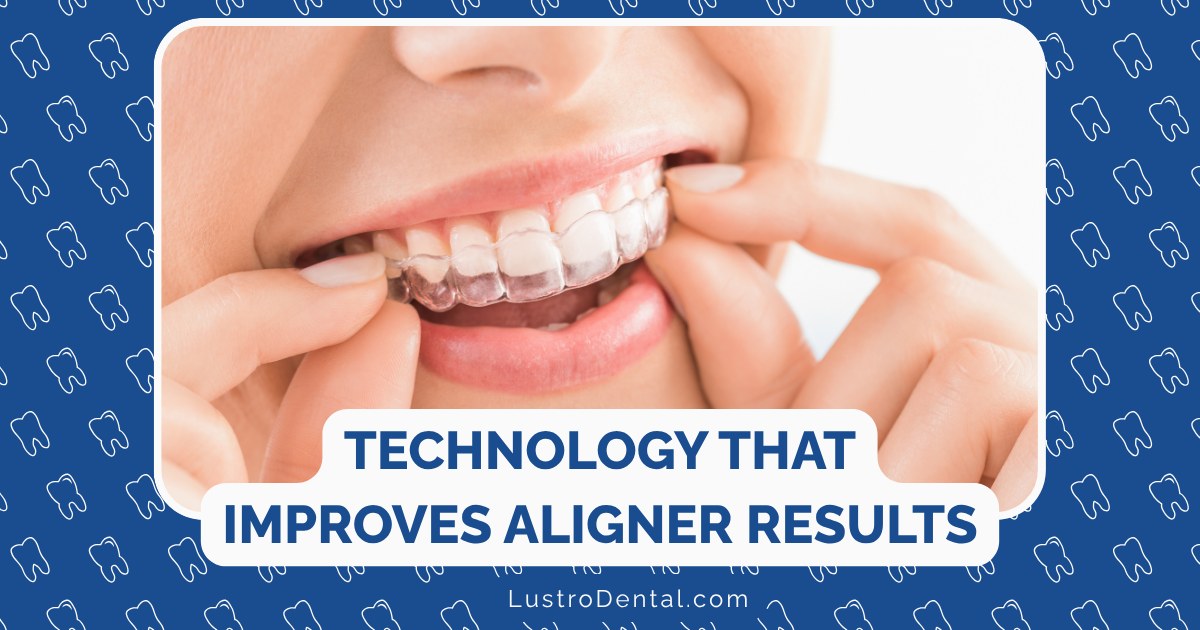
The success of clear aligner therapy hinges on one critical factor that no amount of advanced orthodontic planning can overcome: patient compliance. The most precisely engineered aligners in the world won’t work if they’re sitting in their case instead of on your teeth.
As an orthodontist who’s guided thousands of patients through clear aligner treatment, I’ve seen firsthand how the 20-22 hour daily wear requirement can be challenging to maintain. Life happens—meals stretch longer than expected, social events tempt you to leave aligners at home, and sometimes you simply forget to put them back in.
The good news? Technology is revolutionizing how patients approach aligner compliance. In 2025, a new generation of tech solutions is making it easier than ever for patients to stay on track with their treatment—and for orthodontists to provide more effective guidance.
Let’s explore the cutting-edge technologies transforming clear aligner compliance and how they’re creating better outcomes for patients everywhere.
Before diving into technological solutions, it’s important to understand why compliance is so crucial for clear aligner treatment success:
Clear aligners work through consistent, gentle pressure that gradually moves teeth into their desired positions. Research published in the American Journal of Orthodontics and Dentofacial Orthopedics has shown that:
This is why orthodontists prescribe 20-22 hours of daily wear—it ensures teeth receive consistent pressure with minimal interruptions.
Studies reveal a significant discrepancy between reported and actual wear time:
Dr. Sarah Johnson of Metropolitan Orthodontics explains: “When patients wear aligners less than prescribed, teeth don’t move as expected. This leads to ‘tracking issues’ where teeth fall behind the treatment plan, often requiring additional aligners, extended treatment time, and sometimes complete treatment revisions.”
The orthodontic industry has responded to compliance challenges with innovative technologies designed to help patients stay on track. Here are the leading solutions changing the game in 2025:
Perhaps the most significant advancement in aligner compliance has been the development of microsensors embedded directly within the aligners themselves.
DentiTrac® Smart Aligners This system not only tracks wear time but also monitors spatial orientation and movement patterns, providing insights into how consistently aligners are seated properly.
TheraMon® Microsensors These temperature-based sensors have been clinically validated to provide accurate wear time data within a 15-minute margin of error.
SmartTrack Compliance Align Technology (makers of Invisalign) has integrated microsensors into select aligner products, allowing for precise compliance monitoring through their app ecosystem.
A 2024 study published in the Journal of Clinical Orthodontics found that patients using aligners with embedded sensors:
Dr. Michael Chen, orthodontist at Advanced Orthodontic Solutions, notes: “The simple awareness that wear time is being monitored objectively makes a tremendous difference. It’s human nature—we perform better when we know our actions are being measured.”
While embedded sensors focus on wear time, AI-powered remote monitoring systems evaluate whether treatment is progressing as planned.
DentalMonitoring This platform can detect over 130 oral observations remotely, including tracking whether aligners are seating properly. The system includes a proprietary ScanBox pro device that patients use with their smartphones to capture standardized images.
CandidMonitoring™ This AI-driven platform evaluates photos submitted by patients to assess aligner fit and determine if prescribed movements have been achieved. The system can alert patients when it’s safe to move to the next aligner in their series.
Grin Remote Monitoring System Using a specialized phone attachment called the Grin Scope, this system captures high-quality intraoral images that are analyzed by AI and reviewed by the patient’s orthodontist.
Remote monitoring systems have shown remarkable benefits:
“Remote monitoring has completely transformed how we practice,” explains Dr. Lisa Patel. “We can now provide the oversight patients need without requiring them to come to the office every 6-8 weeks. When issues arise, we address them immediately rather than discovering problems weeks later.”
Leveraging behavioral psychology, gamified apps are making compliance more engaging and rewarding for patients.
Align Wear Time Rewards This system integrates with sensor data and rewards consistent wear with points that can be redeemed for gift cards or treatment accessories.
OrthoFi Smile Journey Patients earn virtual badges and milestone celebrations while tracking their progress through visual timelines and before/after comparisons.
SmileSnap Compliance Challenge This platform allows orthodontic practices to create office-wide challenges and leaderboards, fostering friendly competition among patients.
Gamification has proven particularly effective with younger patients:
“The psychological element of compliance can’t be overstated,” says behavioral psychologist Dr. Jennifer Williams. “Gamification transforms a medical requirement into something fun and rewarding, which is exactly what many patients need to maintain consistency.”
Beyond electronic monitoring, innovative aligner materials themselves can now indicate wear time.
ChromAlign Technology These aligners incorporate a subtle color-changing strip that gradually transitions from clear to blue based on cumulative wear time.
WearCheck Indicators Small dots embedded in the aligner material change from white to blue after approximately 12 hours of wear, providing a simple binary indicator of daily compliance.
GradientWear Technology Rather than a binary indicator, this system shows a gradient color change that correlates with the number of hours worn, giving more nuanced feedback.
While less precise than electronic sensors, visual indicators offer unique advantages:
“Visual indicators serve as constant reminders throughout the day,” notes Dr. Robert Johnson. “They create accountability not just to the orthodontist but to the patient themselves, who can literally see their compliance level every time they remove their aligners.”
Comprehensive platforms are now bringing together multiple compliance technologies into unified ecosystems.
OrthoFX FXOnTrack This AI-driven platform not only monitors compliance but can detect when treatment is off track, allowing for the rapid deployment of “rescue aligners” to get patients back on their original treatment plan without office visits.
Invisalign Virtual Care Combining compliance tracking with treatment monitoring, this platform creates a digital ecosystem connecting patients and providers throughout the treatment journey.
3Shape Unite This open platform integrates with multiple aligner brands and monitoring systems, allowing orthodontists to standardize their digital workflow regardless of which aligner system patients use.
Integrated platforms are reshaping orthodontic practice management:
While improved compliance is the primary goal of these technologies, they’re delivering additional benefits that extend well beyond simply tracking wear time:
With better compliance and early intervention when issues arise:
Tech solutions are making the aligner journey more engaging:
For orthodontic practices, compliance technology creates operational benefits:
The wealth of data generated is advancing the field as a whole:
Despite their benefits, compliance technologies come with important considerations:
The collection of detailed health data raises privacy questions:
Not all patients have equal access to technology:
Technology should enhance, not replace, the patient-provider relationship:
Looking beyond 2025, several emerging technologies promise to further transform aligner compliance:
Research is advancing on aligner materials that actively respond to the oral environment:
Next-generation monitoring may include:
Artificial intelligence is evolving to predict compliance issues before they occur:
If you’re a patient considering or currently in clear aligner treatment, here’s how to leverage compliance technology effectively:
Clear aligner therapy has come a long way since the days of guessing whether patients were truly wearing their aligners as prescribed. Today’s technology is creating a new paradigm where compliance is objective, measurable, and improvable.
For patients, these innovations mean more predictable results, shorter treatment times, and a more engaging experience. For orthodontists, they provide unprecedented insight and control over treatment progression, even when patients aren’t in the office.
As we look to the future, the continued evolution of compliance technology promises to make clear aligner therapy even more effective and accessible. The most exciting aspect isn’t just the technology itself, but how it’s transforming the relationship between patients and providers—creating true partnerships in achieving beautiful, healthy smiles.
What compliance technologies have you experienced in your aligner journey? Share your experiences in the comments below!