🦷 General Care
✨ Treatments
👶 Family Care
💚 Wellness
💡 Resources

🦷 General Care
✨ Treatments
👶 Family Care
💚 Wellness
💡 Resources

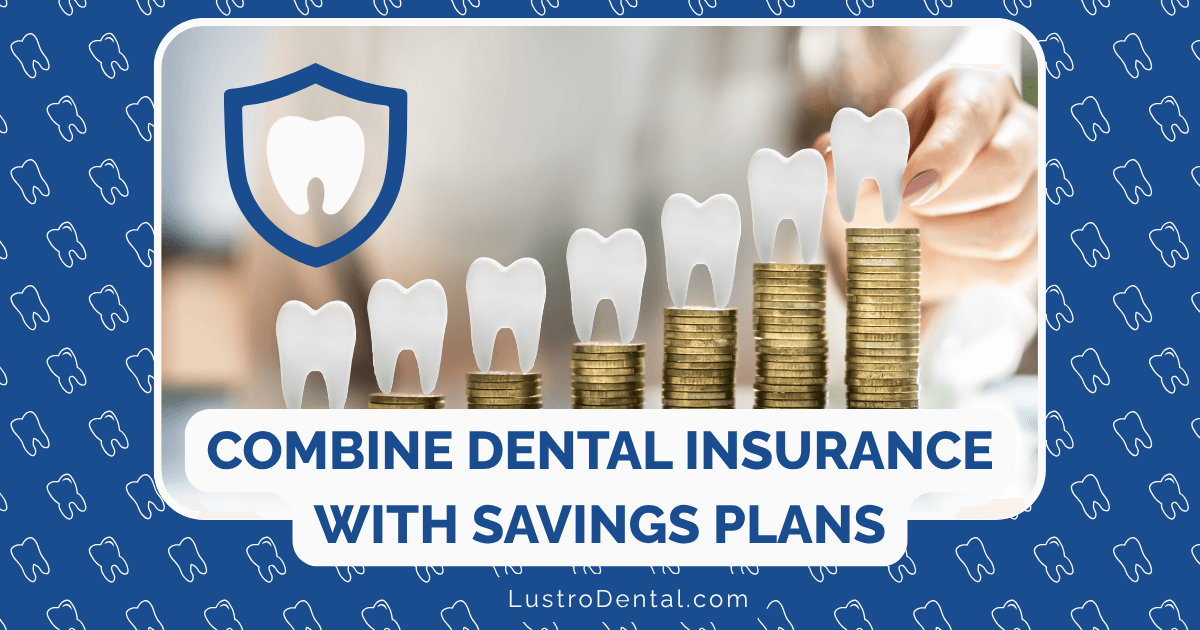
Let’s face it—dental insurance alone rarely covers everything you need. With typical annual maximums stuck at $1,000-$1,500 (an amount that hasn’t substantially changed since the 1970s), even those with insurance often find themselves paying significant out-of-pocket costs for major dental work.
What if you could strategically combine dental insurance with savings plans to plug these coverage gaps? According to the American Dental Association, nearly 40% of dental costs in America are paid out-of-pocket. But with the right combination of coverage options, you can dramatically reduce that percentage.
Before diving into solutions, let’s understand the problem. Traditional dental insurance typically has:
Meanwhile, dental savings plans (also called dental discount plans) offer:
The strategic combination of both can create a more comprehensive coverage approach that neither option provides alone.
This is where confusion often sets in. According to DentalPlans.com, you cannot apply both insurance benefits and discount plan savings to the same procedure at the same time. In other words, you can’t double-dip on the same service.
However, you can absolutely use both types of plans strategically throughout the year for different procedures or after you’ve exhausted certain benefits. This distinction is crucial.
Here are the most effective ways to combine dental insurance with savings plans:
How it works:
Example: John has a $1,500 annual maximum on his dental insurance. He needs:
Total cost: $2,600
With insurance alone, he’d pay:
Total out-of-pocket: $490
With the combination approach:
Total out-of-pocket: $880 vs. $1,100 if he paid the remaining crown cost without a savings plan
When this works best: When you anticipate exceeding your annual maximum
How it works:
Example: Sarah just enrolled in dental insurance but has a 12-month waiting period for major procedures. She needs a root canal and crown immediately.
With insurance alone:
With the combination approach:
When this works best: When you need immediate major dental work but have insurance waiting periods
How it works:
Example: Michael wants cosmetic veneers and also needs a crown. His insurance excludes cosmetic procedures but covers 50% of the crown.
With insurance alone:
With the combination approach:
When this works best: When you want procedures that aren’t covered by your insurance (cosmetic work, certain specialists, implants)
How it works:
Example: Jennifer has insurance but her preferred specialist is out-of-network, resulting in significantly reduced benefits.
With insurance alone:
With the combination approach:
When this works best: When you want to see specific providers who aren’t in your insurance network
The financial equation is straightforward:
Combination approach makes sense when: Annual insurance premium + Annual savings plan fee < Out-of-pocket costs saved
According to Cigna, a typical individual dental insurance premium ranges from $15-$50 monthly ($180-$600 annually), while dental savings plans typically cost $80-$200 annually.
Let’s run the numbers for a typical scenario:
Assumptions:
For this combination to make financial sense, you need to save more than $500 in out-of-pocket costs compared to having insurance alone.
This typically occurs when:
Before purchasing either option, get a comprehensive dental exam and treatment plan. Know what procedures you need in the next 12 months.
Understand:
Look for plans that:
According to 1Dental, some of the most popular options include Careington, Aetna Vital Savings, and Cigna Dental Savings.
Map out which plan you’ll use for which procedures based on the scenarios above.
This is crucial. Before treatment:
Some dental offices may be unfamiliar with patients using both options strategically.
Solution: Bring printed information about both plans and clearly communicate your strategy before treatment begins.
Your preferred dentist might accept your insurance but not your savings plan, or vice versa.
Solution: Verify participation in both programs before purchasing either.
Some offices might incorrectly try to apply coordination of benefits rules (which apply to multiple insurance policies) to savings plans.
Solution: Clarify that savings plans are not insurance and therefore not subject to coordination of benefits.
Both insurance and savings plans typically auto-renew, potentially leaving you paying for coverage you no longer need.
Solution: Calendar reminders to reassess your needs before renewal dates.
The combination strategy works particularly well for:
Combining dental insurance with savings plans isn’t about double-dipping on benefits. It’s about strategically using each option where it provides the most value. This approach requires more planning and management than simply purchasing comprehensive insurance, but the financial benefits can be substantial.
As Delta Dental points out, the goal of any coverage strategy should be to maximize benefits while minimizing out-of-pocket costs. For many people, the combination approach achieves this better than either option alone.
Have you tried combining dental insurance with savings plans? Share your experience in the comments below!