🦷 General Care
✨ Treatments
👶 Family Care
💚 Wellness
💡 Resources

🦷 General Care
✨ Treatments
👶 Family Care
💚 Wellness
💡 Resources

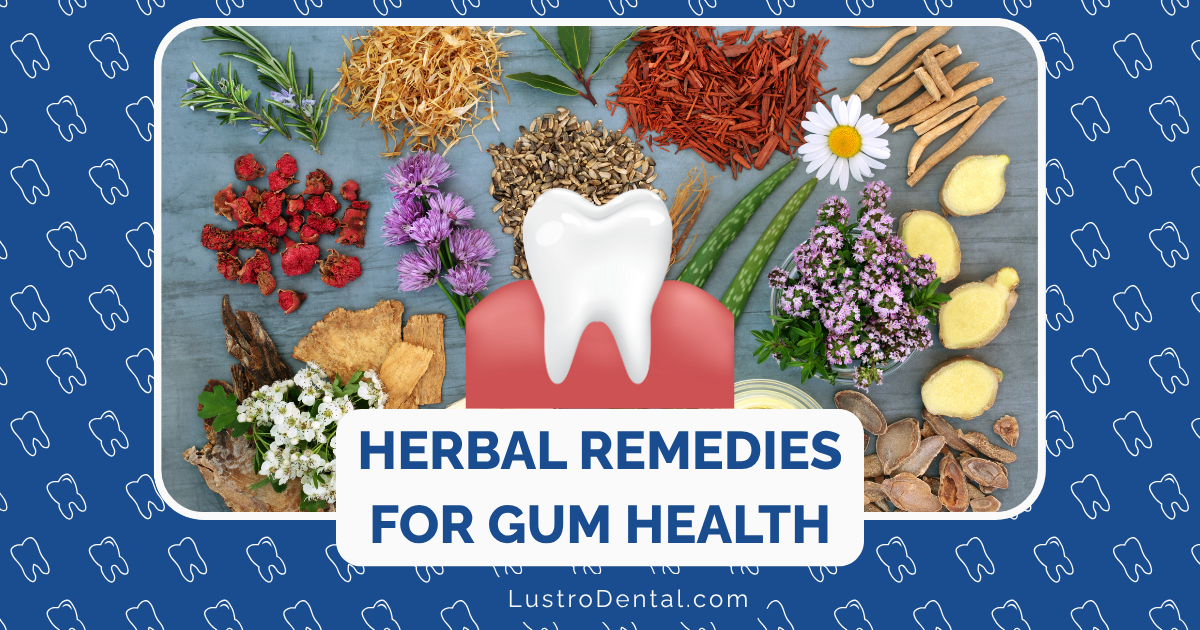
In the quest for optimal oral health, many people are turning to natural approaches that complement conventional dental care. Herbal remedies for gum health have been used across cultures for centuries, but which ones actually work according to modern science? As interest in natural dental care grows, it’s important to separate evidence-based options from those with little scientific support.
As a dental health advocate, I’m excited to explore herbal approaches to gum health that have substantial research behind them. In this comprehensive guide, we’ll examine the scientific evidence supporting specific herbs and natural compounds for promoting gum health, their mechanisms of action, and how to incorporate them effectively into your oral care routine.
Before diving into herbal remedies, let’s briefly understand what we’re treating. Gum (periodontal) health is fundamental to overall oral health and can impact systemic health as well.
Common gum conditions include:
These conditions are primarily caused by bacterial biofilm (plaque), though factors like genetics, smoking, stress, and certain medications can contribute to their development and progression.
Modern research has identified several mechanisms through which herbs can benefit gum health:
Let’s explore the herbs with the strongest scientific evidence supporting their use for gum health.
Scientific Evidence: Turmeric has emerged as one of the most well-researched herbs for gum health. Its active compound, curcumin, has powerful anti-inflammatory, antimicrobial, and antioxidant properties.
A clinical study published in May 2025 in the Journal of Pharmaceutical and Biomedical Sciences evaluated curcumin gel as an adjunct to scaling and root planing in patients with chronic periodontitis. The results were impressive:
Mechanism of Action: Curcumin works by inhibiting inflammatory molecules (like COX-2, LOX, and TNF-α) and reducing oxidative stress. It also decreases histamine levels and inhibits the synthesis of inflammatory prostaglandins.
Practical Application: Turmeric can be used in several ways for gum health:
Scientific Evidence: Neem has a long history in Ayurvedic medicine for oral health. Modern research confirms its antibacterial, antifungal, and anti-inflammatory properties.
A double-blind study cited in the Journal of Periodontal & Implant Science found that a 0.19% neem extract combined with mechanical therapy effectively treated gingivitis. Another study published in the Journal of Phytomorphology in 2025 reported that herbal toothpaste containing neem extract significantly reduced plaque levels and improved gum health compared to conventional fluoride toothpaste.
Mechanism of Action: Neem contains compounds like nimbidin and azadirachtin that reduce bacterial adherence to teeth and inhibit glucosyltransferase activity (an enzyme that helps bacteria stick to tooth surfaces). It also disrupts bacterial cell membranes and reduces inflammation.
Practical Application:
Scientific Evidence: Tea tree oil has shown significant promise for gum health due to its potent antimicrobial properties.
Clinical studies indicate that tea tree oil can serve as an effective alternative to chlorhexidine (a gold standard antimicrobial mouthwash) in managing gingival inflammation. Research published in the Journal of Phytomorphology found that mouthwashes formulated with tea tree oil showed strong antibacterial effects, reducing bacterial biofilm formation and preventing gingivitis.
Mechanism of Action: Tea tree oil contains terpinen-4-ol and other compounds that penetrate bacterial biofilms, disrupt cell membranes, and inhibit bacterial respiration. It also has anti-inflammatory effects that help reduce gingival inflammation.
Practical Application:
Caution: Tea tree oil should never be swallowed and must be properly diluted before use.
Scientific Evidence: Aloe vera is well-known for its healing properties and has demonstrated effectiveness for gum health.
A systematic review published in PMC found that aloe vera effectively reduces inflammation in oral conditions and promotes healing. Studies have shown its effectiveness against oral pathogens such as Streptococcus mutans and Staphylococcus aureus, making it valuable for preventing and treating gum disease.
Mechanism of Action: Aloe vera contains compounds like acemannan that stimulate antibody production, promote tissue healing, and reduce inflammation. It also has antimicrobial properties that help control oral pathogens.
Practical Application:
Scientific Evidence: Green tea’s catechins, particularly epigallocatechin gallate (EGCG), have shown significant benefits for gum health.
A systematic review included in MDPI Nutrients found that green tea extracts demonstrated effectiveness comparable to conventional treatments for gingivitis and periodontal disease. Clinical studies show that green tea catechins can reduce gingival inflammation and inhibit the growth of periodontal pathogens.
Mechanism of Action: Green tea catechins inhibit bacterial growth, reduce inflammation by suppressing pro-inflammatory cytokines, and prevent the breakdown of collagen in gum tissue. They also have antioxidant effects that protect against tissue damage.
Practical Application:
Scientific Evidence: Pomegranate has emerged as a powerful herb for gum health, with multiple studies supporting its effectiveness.
Research cited in the MDPI Nutrients journal found that pomegranate extracts significantly reduced inflammatory mediators and stimulated collagen production in periodontal tissues. Studies have shown that pomegranate-based mouthwashes can be as effective as chlorhexidine for reducing plaque and gingivitis.
Mechanism of Action: Pomegranate contains ellagitannins and other polyphenols that have antimicrobial, anti-inflammatory, and antioxidant effects. It also enhances fibroblast migration and proliferation, promoting tissue healing.
Practical Application:
Scientific Evidence: This natural flavonoid is gaining attention for its potential in gum health. A 2025 study from Penn Dental Medicine found that quercetin, when combined with the enzyme inhibitor dasatinib, reduced markers of senescence, periodontal inflammation, and bone loss in lab and animal models.
Mechanism of Action: Quercetin has potent antioxidant and anti-inflammatory properties. It appears to target senescent cells (damaged cells that contribute to inflammation) and reduce the production of inflammatory cytokines.
Practical Application:
For those interested in incorporating herbal remedies into their oral care routine, here are some practical approaches:
Basic Herbal Mouthwash Recipe:
Instructions:
Turmeric-Aloe Gum Paste:
Instructions:
Instructions:
While herbal approaches show promise, it’s important to understand their limitations:
Unlike pharmaceutical products, the concentration of active compounds in herbs can vary based on growing conditions, processing methods, and storage. This can lead to inconsistent results.
Many herbal products lack standardization, making it difficult to determine optimal dosages and formulations.
Some individuals may be allergic or sensitive to certain herbs. Always perform a patch test before using a new herbal remedy, especially concentrated essential oils.
Some herbs can interact with prescription medications. Consult your healthcare provider before starting any herbal regimen, especially if you take prescription drugs.
Dr. Sarah Johnson, a periodontist specializing in integrative approaches, emphasizes: “Herbal remedies can be valuable adjuncts to professional dental care, but they should not replace regular dental check-ups, professional cleanings, or necessary treatments for active periodontal disease.”
The most effective approach to gum health often combines conventional dental care with evidence-based herbal remedies:
The field of herbal dentistry continues to evolve, with several exciting developments on the horizon:
Herbal approaches to gum health offer promising options for those seeking natural complements to conventional dental care. The strongest scientific evidence supports the use of turmeric, neem, tea tree oil, aloe vera, green tea, and pomegranate for improving various aspects of gum health.
When used appropriately—with an understanding of their benefits, limitations, and proper application methods—these herbs can be valuable tools in your oral health arsenal. However, they work best as part of a comprehensive approach that includes proper oral hygiene practices and regular professional dental care.
By combining ancient wisdom with modern scientific validation, we can harness the power of nature to support healthy gums while ensuring we’re using approaches that truly work.
Have you tried any herbal remedies for gum health? What was your experience like? Share your thoughts in the comments below.